A Mother’s Madness: The Tragic Balmain Filicide Case of 1894.
By Elliot Lindsay
Preface
In August and September 2026, the world has watched as the controversial trial of Lindsay Clancy has played out in Massachusetts, United States. In January 2023, Clancy killed her three young children, each under the age of five. Her defence did not dispute that she committed the acts; rather, the central question before the court was whether she was suffering from postpartum psychosis and bipolar disorder to such an extent that she lacked criminal responsibility. Unlike in New South Wales, where the defence generally bears the burden of establishing mental health impairment, once the issue is properly raised in Massachusetts the prosecution must prove beyond reasonable doubt that the accused was criminally responsible. The case has also unfolded in the age of social media, raising difficult questions about how an impartial jury can be assembled when prospective jurors may already have encountered an enormous volume of commentary, speculation and opinion online.
I do not intend to venture further into the particulars of the Clancy case. Instead, it provides a contemporary point of departure for a remarkably similar legal and moral dilemma that confronted New South Wales more than 130 years ago. In March 1894, in the Sydney suburb of Balmain, Sarah Bayley killed her six-year-old daughter, Emily, during what contemporary witnesses, doctors and ultimately the courts accepted was a profound episode of mental illness.
The world in which the Bayley tragedy occurred was markedly different from our own. Clinical psychiatry was still in its infancy, modern psychiatric medications did not exist, and the tragedy unfolded against the backdrop of the devastating economic depression of the 1890s. The circumstances of Sarah Bayley and Lindsay Clancy were, of course, very different, and it would be inappropriate to retrospectively assign Bayley a modern psychiatric diagnosis. Nevertheless, the fundamental dilemma confronting the courts was strikingly familiar: how should society respond when a person unquestionably commits a terrible act, but may have been so profoundly mentally unwell that they could not be held criminally responsible for it? Sarah Bayley’s case provides a remarkable window into how the courts and community of colonial New South Wales confronted that question in 1894.
Filicide in Balmain – 1894
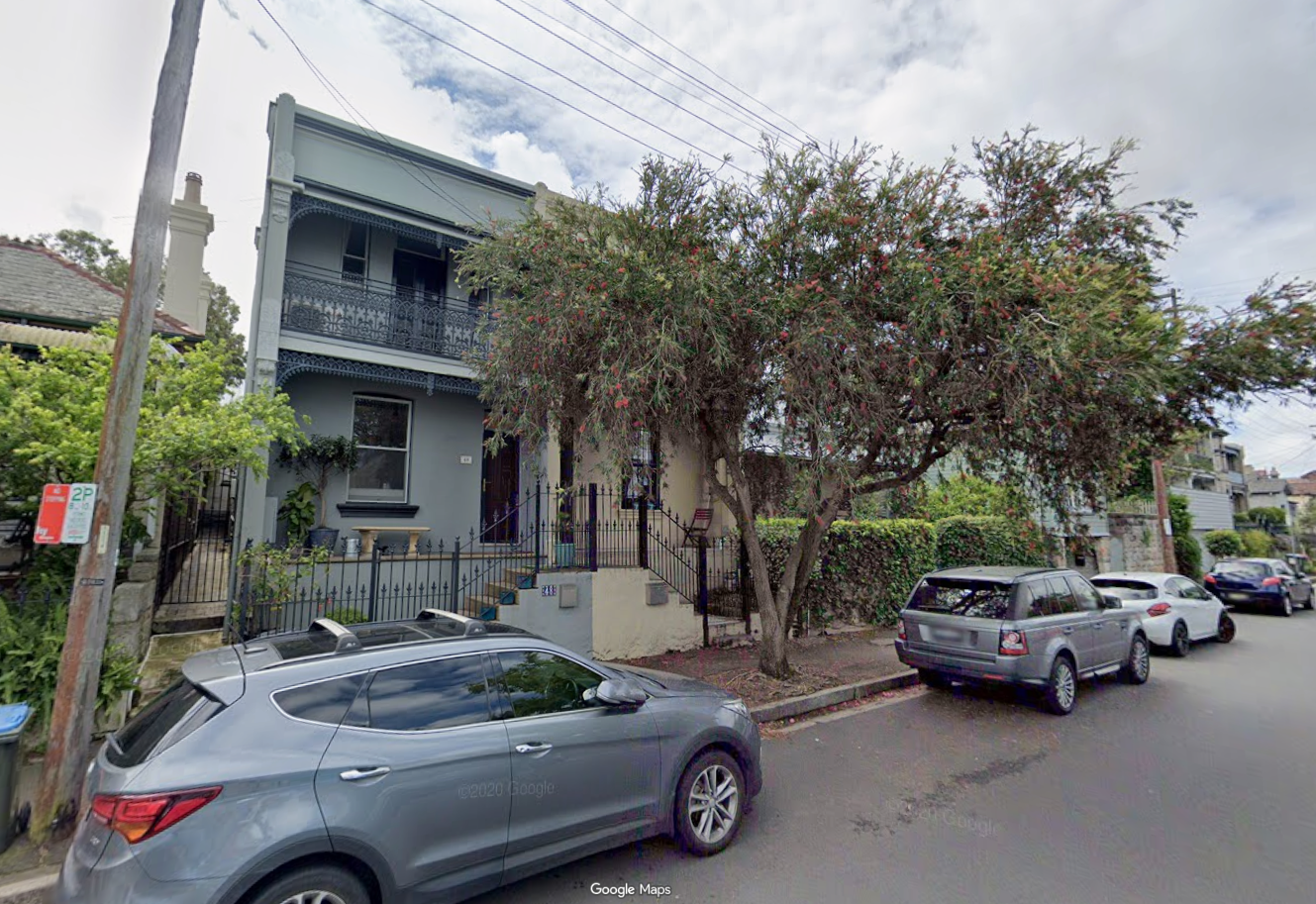
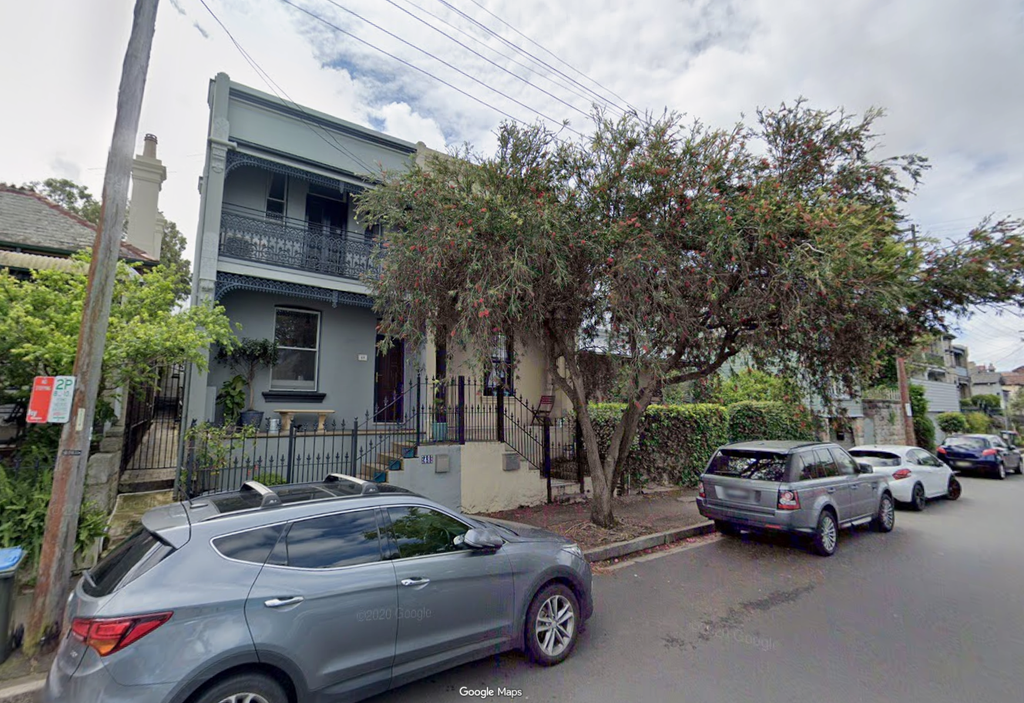
On the morning of 14 March 1894, a terrible scene unfolded behind a modest cottage at 50 Rowntree Street, Balmain. Six-year-old Emily Bayley was playing in the yard with her older sister Edith when their mother, Sarah Bayley, emerged carrying an axe. Within hours Emily was dead. There was little mystery about who had killed her. Her sister had witnessed the attack, the bloodstained axe remained in the yard, and Sarah was found nearby in a state of extreme mental disturbance. The question that would occupy doctors, a coroner, a succession of jurors and eventually the Supreme Court was not whether Sarah had killed her daughter, but whether she could legally be held responsible for doing so. It would take more than five years for that question to be finally answered.
The Bayley Family of Rowntree Street
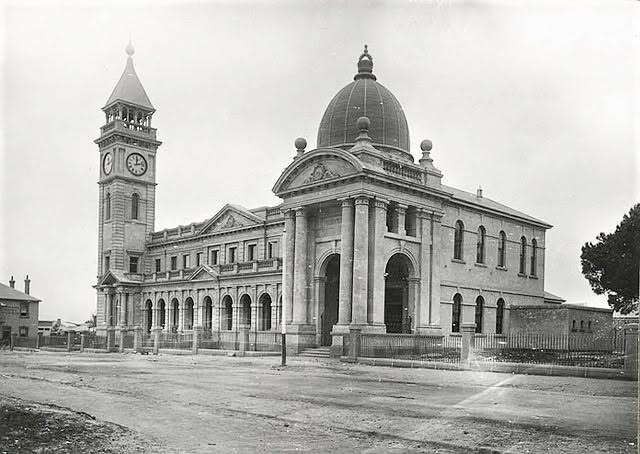
Sarah Bayley was a widow of about 50 who lived at 50 Rowntree Street, a short distance from Balmain Town Hall. Contemporary newspapers described the house as a neat cottage in a densely populated neighbourhood. Sarah had raised a family of seven children, several of whom were already adults and married, while her two youngest daughters, Edith and Emily, remained at home. Nothing in Sarah’s reputation suggested violence. Neighbours spoke highly of her, while George Jones, a timber salesman who had boarded with the family for approximately nine years, remembered Sarah as a kind woman who was particularly devoted to Emily. The Evening News reported that Jones said Sarah “doted” upon the little girl, whom he remembered as a “beautiful, bright-eyed, curly-haired little girl.” Sarah was described as temperate and there was no suggestion that she had previously mistreated her children. Even when she eventually stood trial for murder, the Crown Prosecutor described her as a respectable woman and a kind and affectionate mother.
There were, however, indications that something had gone seriously wrong with Sarah’s health. Her husband had died in November 1890, leaving Sarah Widowed during the worst economic depression in colony’s history, an event that had a huge impact on the residents of Balmain and its maritime economy. Newspapers reported that she had not enjoyed the best of health since her bereavement. By late 1893 her condition had apparently begun to change. She repeatedly complained of severe pains in her head, something that became so common that Jones later told the inquest it was nothing unusual to hear her complain, “Oh, my head is very bad.” Some accounts went further. At her eventual trial it was reported that she had developed peculiar symptoms and suffered “fits”, which one newspaper characterised as indications of “brain trouble”. She had also reportedly been receiving treatment from Dr Carruthers of Balmain. Whatever illness Sarah was suffering from, on the morning of 14 March 1894 it reached a catastrophic point.
“Oh, My Head Is Very Bad”
That morning Sarah asked Edith and Emily not to go to school. Her explanation was strangely poignant: she felt miserable and did not want to be left alone. The precise wording differs slightly between newspaper reports, but the substance is consistent. Sarah complained that her head was particularly bad and asked the girls to remain at home to keep her company. George Jones had breakfast at the house at about eight o’clock and later recalled Sarah sitting in the kitchen complaining, “Oh, my head is very bad.” He did not apparently regard the complaint as alarming. Sarah had been suffering similar headaches for months and they generally improved as the day progressed. When Jones left the house at about ten minutes to nine, Sarah appeared quiet and behaved much as usual. Only Sarah and the two girls remained at the cottage.
Edith and Emily went into a shed in the yard and began playing jacks. Sarah soon followed them. Edith’s sworn testimony at the subsequent inquest provides the clearest account of what happened next. According to the ten-year-old girl, her mother approached Emily without saying a word and struck her twice on the back of the head with an American-style axe. Emily bent forward and cried, “Oh, mamma,” before collapsing to the ground. Edith screamed and fled through the side lane, with Sarah following her into the street, it was implied that Sarah may have intended to kill Edith next. The earliest newspaper reports were confused about some details of the attack. Emily’s age was variously given as five, six and seven; Edith was initially called Alice; and reports claimed Emily had been struck three, four or even five times. One early account suggested Jones had heard the screams and immediately rushed into the yard, although his later sworn evidence established that he had left the house and returned shortly afterwards to retrieve his overcoat because it had begun to rain. Despite these discrepancies, the essential sequence of events was never seriously disputed.
The Death of Emily Bayley
Neighbour Janet Stirling heard screaming and went outside to investigate. She found Sarah behaving extraordinarily on the footpath, waving her arms and screaming, while Edith was hysterical. Other contemporary reports claimed Sarah ran to a nearby house at 46 Rowntree Street and attempted to tell the occupants what she had done. Neighbours quickly converged on the cottage. Jones, meanwhile, returned to Rowntree Street and encountered what he described as a strange scene, with several women attempting to restrain Sarah. Entering the yard, he discovered Emily lying on the ground and bleeding heavily. Beside her was the axe. Senior Constable William Duncan later testified that the weapon was stained with blood and had human hair adhering to it.
Emily was rushed to Balmain Cottage Hospital on Booth Street, where Dr Leslie Gordon Davidson confronted appalling injuries. Several wounds had fractured her skull and driven portions of bone inward, lacerating the membranes and brain. Another wound crossed the left side of her face, smashing the nasal bone, cheek and upper jaw. Davidson removed numerous fragments of depressed bone and attempted to repair the damage, but Emily’s condition was hopeless. She remained unconscious and suffering severely from shock. At approximately three o’clock that afternoon, only hours after playing jacks with her sister in the backyard of her home, Emily Bayley died.
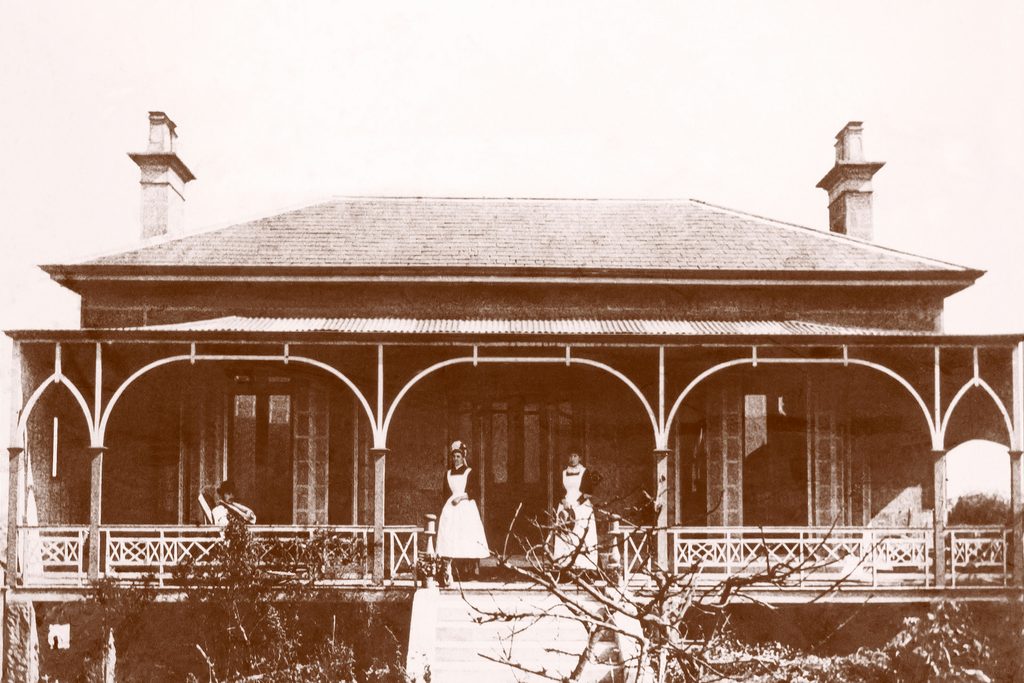
While doctors attempted to save Emily, Sarah’s own condition was causing considerable alarm. Senior Constable Duncan described her as being in a “raving state”, with several adults struggling to restrain her. Contemporary reports claimed she became so violent that she had to be secured to a stretcher before she could be removed. Initially, police charged Sarah with inflicting grievous bodily harm, as Emily was still alive. Sarah was subsequently taken to the Darlinghurst Lunatic Reception House and placed under medical supervision. Dr Carruthers and another doctor reportedly certified her insane. Significantly, Sarah’s condition did not simply disappear once the immediate crisis had passed. The following day she remained severely disturbed, and on 16 March, two days after Emily’s death, the Australian Star reported that there had been no improvement in her condition. Her mental state was considered so poor that the substantive inquest into Emily’s death could not proceed. Only formal identification evidence was taken before the inquiry was adjourned. Sarah’s insanity, therefore, was not a defence invented months or years afterwards by lawyers attempting to avoid a murder conviction. Her profound mental disturbance had been witnessed by neighbours and police and medically recognised almost from the moment Emily was attacked.
The Inquest and a Question of Insanity
The adjourned inquest resumed at Balmain Police Courts on 21 March before City Coroner J. C. Woore. Sarah was brought before the court, but newspapers described a woman seemingly incapable of understanding the gravity of what was happening around her. The scene was described as “pitiable in the extreme”. Sarah sat supported by one of her adult sons, although newspaper reports disagree over whether this was George or Joseph Bayley. One account said her son sat with his arm around her neck throughout the hearing, while another reported that he had to physically support his mother to prevent her from falling. Sarah appeared vacant and detached. She scarcely looked at the witnesses, not even when her surviving daughter entered the proceedings to describe what had happened to Emily. When the bloodstained axe was presented to the jury, Sarah reportedly stared vacantly towards them. Most remarkably, newspapers claimed that a week after the killing she remained incapable of comprehending her own position and had not yet been considered sufficiently sane to be informed that Emily was dead.
Ten-year-old Edith provided the principal eyewitness evidence. She told the inquest that her mother had asked the girls to remain home from school because she felt miserable and wanted their company. Edith and Emily went into the shed to play jacks. Their mother followed them and struck Emily with the axe. There had been no argument and apparently no warning. Emily simply cried, “Oh, mamma,” and fell. George Jones then described Sarah’s recurring headaches and emphasised that she had always treated her children kindly and was particularly fond of Emily. Janet Stirling described the extraordinary scene outside the cottage, while Senior Constable Duncan gave evidence concerning Sarah’s violent condition and the bloodstained axe. Dr Davidson described the catastrophic injuries he had treated at Balmain Cottage Hospital, and Government Pathologist Dr Rennie testified that Emily had suffered multiple wounds and fractures, with portions of her skull driven inward and her brain lacerated. There was no doubt that Emily had died from the injuries inflicted by Sarah. What remained was the far more difficult question of whether Sarah could properly be regarded as a murderer if she had been insane when she killed her daughter.
“Whilst Temporarily Insane”
After hearing the evidence, the inquest jury attempted to answer that question themselves. Their initial verdict was that Emily Bayley had been killed by Sarah Bayley “whilst temporarily insane.” City Coroner Woore refused to accept the finding. He explained that insanity was a question to be determined by another court. The inquest was only a preliminary inquiry into Emily’s death, not Sarah’s criminal trial, and the question of whether Sarah had been compos mentis—of sound mind—when she committed the act would have to be determined at the Central Criminal Court. If the jurors accepted that Sarah had deliberately inflicted the injuries that killed Emily, Woore explained, their appropriate finding at this stage was wilful murder. The jury consulted again and returned the verdict the Coroner required: wilful murder against Sarah Bayley.
The exchange is perhaps the most revealing moment in the entire case. The jurors plainly believed Sarah’s mental condition was inseparable from Emily’s death and instinctively attempted to record that fact in their verdict. The Coroner was not necessarily disputing their conclusion; rather, he was telling them that the coronial inquiry was not the legal forum in which Sarah’s criminal responsibility could be determined. Sarah was therefore formally committed to stand trial for murder at the next sittings of the Central Criminal Court on 2 April 1894. Yet there was an immediate and fundamental problem: the woman charged with murder remained too mentally ill to be tried.
Too Insane to Stand Trial
By 2 April Sarah was confined in the Parramatta Asylum. When her case was called at the Criminal Court, the Crown Prosecutor informed the court that she remained incapable of appearing and pleading to the indictment. The murder trial consequently did not proceed. Sarah entered an extraordinary legal limbo. Everyone knew Emily was dead. There was no meaningful dispute that Sarah had killed her. A coroner’s jury had returned a verdict of wilful murder and she had been formally committed for trial, yet the criminal justice system could not determine her guilt while she remained incapable of understanding or participating in the proceedings against her. Sarah consequently remained institutionalised—not for several weeks or months, but for more than five years.
Then, in May 1899, Sarah Bayley’s name unexpectedly reappeared among the cases listed for hearing at the Central Criminal Court. More than five years had passed since Emily had died in the yard at Rowntree Street. Sarah had spent the intervening period confined in an asylum, but by 1899 doctors apparently considered her sufficiently recovered to undergo the trial postponed since April 1894. She was brought before the Central Criminal Court at Darlinghurst and charged that on 14 March 1894 she had feloniously murdered her daughter Emily, then aged between six and seven years. Sarah pleaded not guilty.
The Trial of Sarah Bayley
Contemporary descriptions suggest Sarah’s recovery was far from complete in any ordinary sense. She had to be supported into the dock and presented what the Sydney Morning Herald called a “very dejected appearance”. Another account described her as being in a “very low and weak condition” and reported that she sobbed throughout the evidence. Nevertheless, she had recovered sufficiently to be considered legally fit to face trial. The remarkable feature of the proceedings was that there was effectively no dispute between the Crown and defence about Sarah’s mental condition when Emily was killed.
Crown Prosecutor C. G. Wade told the jury that Sarah had been a respectable woman and had always been kind and affectionate towards her children. He explained that her mental condition had changed before the killing and that she had developed peculiar symptoms and repeatedly complained of pains in her head. One account of the trial reported that she had suffered “fits”, which were described as indicating “brain trouble”. Wade told the jury that Sarah had, in a moment of mental aberration or madness, taken the life of the daughter she had loved. The principal issue was therefore not whether Sarah had killed Emily, but whether, “within the meaning of the law”, she could be held responsible for what she had done. Evidence was presented concerning Emily’s death and Sarah’s mental condition, including testimony from Dr Reed, who had certified her insane. The jury required virtually no deliberation. According to the Sydney Morning Herald, they did not even leave the jury box before returning their verdict: not guilty on the ground of insanity.
“During the Governor’s Pleasure”
The verdict did not mean Sarah was free to return home. The Chief Justice ordered that she remain in custody “during the Governor’s pleasure.” The phrase sounds comparatively benign today, but its consequences were serious. Sarah had not received an ordinary prison sentence with a fixed date of release. Instead, her continued detention was effectively indefinite, dependent upon executive authority and assessments of whether she could safely be released. After more than five years in an asylum, Sarah therefore returned to custody despite being formally acquitted of murder.
It was an extraordinary conclusion to a case in which Sarah’s insanity had been apparent almost from the beginning. The neighbours who restrained her saw it. Senior Constable Duncan saw it. Doctors certified it. Her condition persisted for days and weeks afterwards. The first inquest jury attempted to acknowledge it in their verdict. Her illness then prevented her from standing trial and resulted in more than five years of institutionalisation. Finally, when she was sufficiently recovered to face the Central Criminal Court, even the Crown presented the killing as the act of a previously loving mother suffering from severe mental disturbance. The criminal jury merely formalised what many of those involved in the case had apparently believed since March 1894.
It appears that Sarah Bayley was released between 1899 and 1902, and died in the home of George Foster at 11 Cromwell Street, Leichhardt on the 22nd of February 1902, aged 56. George Foster was likely married to one of her older daughters.
Murder or Madness?
The death of Emily Bayley was unquestionably a homicide, but the surviving evidence makes the case difficult to understand as an ordinary story of domestic murder. There was no established history of violence or cruelty, no apparent quarrel and no discernible motive. Sarah was consistently described as loving her children and particularly devoted to Emily. In the months before the killing she had suffered recurring headaches, deteriorating health, misery, unusual behaviour and, according to later testimony, fits. On the morning Emily died, Sarah herself complained that the pain in her head was particularly severe and asked her daughters to remain with her because she felt miserable and lonely. What followed appears to have been sudden and inexplicable. Afterwards Sarah made no meaningful attempt to escape or conceal what she had done. Instead, she ran screaming into the street and descended—or perhaps continued—in a state of profound mental disturbance. Within hours doctors had certified her insane. Days later she remained incapable of understanding the proceedings against her and was reportedly unaware that Emily had died. Weeks later she was incapable even of pleading to the murder indictment.
There are obvious limits to what can now be concluded about Sarah Bayley’s illness. Nineteenth-century newspapers used terms such as “lunacy”, “madness”, “demented”, “brain trouble” and “mental aberration” broadly, and it would be inappropriate to retrospectively assign Sarah a modern psychiatric or neurological diagnosis from newspaper accounts alone. Her severe headaches and reported fits are intriguing and may indicate that her illness had physical as well as psychiatric manifestations, but the surviving evidence does not establish their cause. What can be said with considerably greater certainty is that contemporary doctors regarded Sarah as insane, that her incapacity persisted long after the immediate shock of Emily’s death, and that she remained institutionalised for more than five years before she was considered capable of standing trial.
Perhaps the most revealing moment in the entire story therefore occurred not at Sarah’s eventual trial in 1899, but at the Balmain inquest five years earlier. Faced with the brutal death of a six-year-old girl at the hands of her own mother, the jurors attempted to distinguish the terrible act from the mental condition of the woman who had committed it. Their first verdict acknowledged both realities: Emily had been killed by Sarah Bayley, but Sarah had done so “whilst temporarily insane.” The Coroner explained that the law did not permit them to determine that question and required them instead to return a verdict of wilful murder. Five years of confinement followed before another jury was finally placed in a position to answer the question the Balmain jurors had confronted almost immediately. This time there was little hesitation. Sarah Bayley had killed her daughter Emily, but in the eyes of the law she had not been responsible for her actions. The final verdict was not guilty on the ground of insanity.