By Elliot Lindsay (an abridged version first published in Neighbourhood Media, 2010 Magazine, Issue#13)
He was, at first, a man no one would have remembered.
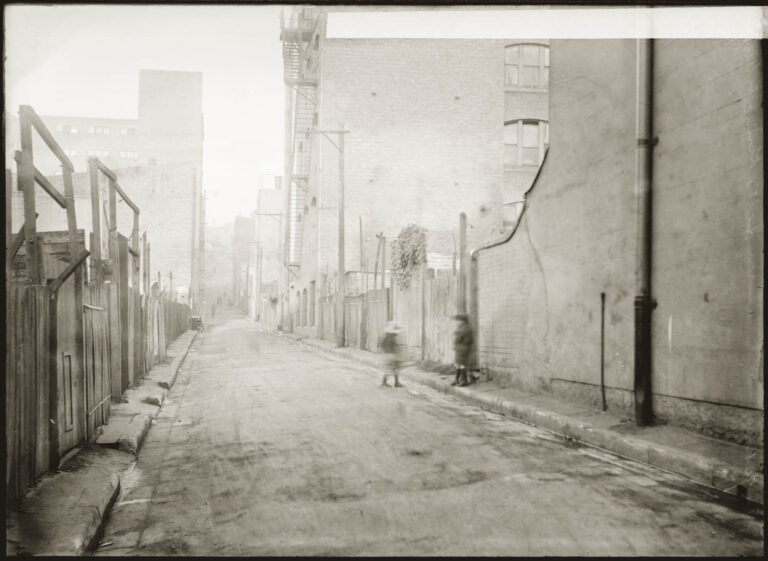
In the early 1880s, along Riley Street in Darlinghurst, Frederick Deeming lived a quiet domestic life. He was a plumber by trade, moving between addresses at 162 and 165 Riley Street, and for a time, he appeared entirely settled. His wife and children lived with him there, and the household seemed ordinary enough to pass without remark. One of his children was even born in that house at 162 Riley Street in 1886. He spoke often of his family, referring to them affectionately, and to neighbours and employers alike, he presented himself as a respectable, if somewhat boastful, working man.
There were, of course, small inconsistencies. He talked too much about wealth, travel, and opportunities that never quite materialised. He possessed jewellery that did not match his means, displaying diamonds with a curious pride. But in those years, Sydney was full of men constructing new identities, and Deeming did not stand out enough to warrant suspicion. He worked, he lived among others, and he raised his children in the crowded inner suburbs of the city.
And yet, even then, there were signs of another life running alongside the first.
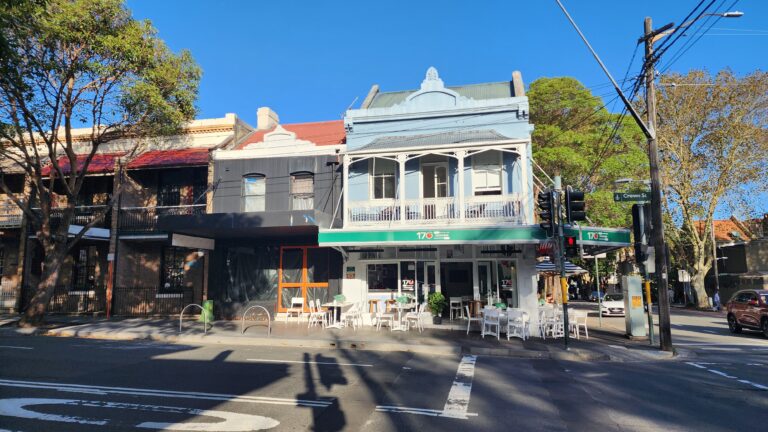
In the evenings of 1885 and 1886, Deeming would leave Riley Street behind and ride east toward Woollahra. There, at Ackland’s Hotel on Queen Street—today the Woollahra Hotel—he began an affair with a 21-year-old barmaid named Annie Spain. It followed a familiar pattern. He courted her with confidence, spoke of money and travel, and promised marriage. To Annie, he was a man on the verge of fortune, temporarily anchored in Sydney but destined for greater things. She had no reason to suspect that only a few miles away, in Darlinghurst, he was living as a husband and father.The
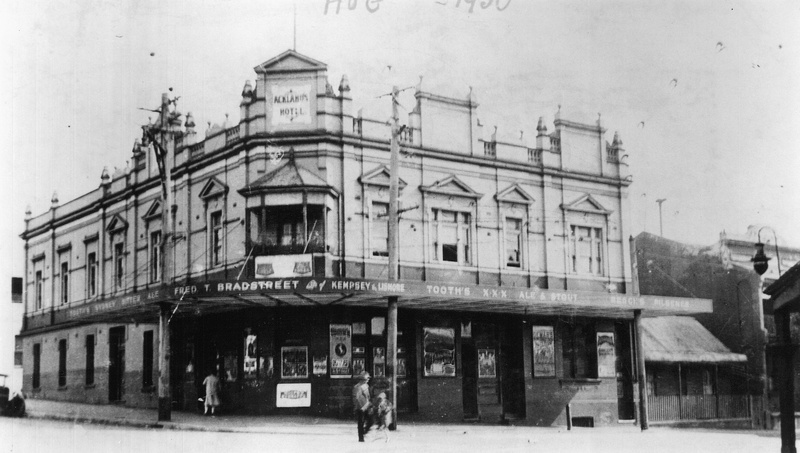
The deception did not last. Annie discovered the truth before any marriage could take place, and when she confronted him, the affair ended abruptly and bitterly. She threw a whisky glass at his head when he entered the bar; he ducked, and it smashed against the wall. The shock of the revelation—so the newspapers later claimed—affected her deeply. Within a few months, in April 1886, she was dead, and though no formal charge could be laid at Deeming’s feet, his conduct was widely blamed for her decline. In retrospect, it stands as a grim early glimpse of the harm he could inflict on those who trusted him.
At this point, Frederick Deeming might still have been dismissed as a liar, a womaniser, and a petty criminal. There was little to suggest that he was anything more. However, this man would soon become a household name around the world due to a level of cruelty and evil that was unfathomable to most people.
Who was Frederick Bailey Deeming?
The answer would not come from Darlinghurst, but from Melbourne.
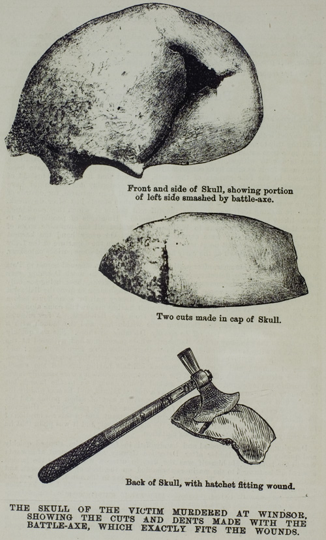
In March 1892, in a small cottage at 57 Andrew Street, Windsor, a prospective tenant complained of a foul odour. Investigations led to the lifting of a hearthstone in the fireplace, and beneath it, in a shallow cavity filled with cement, was found the body of a woman. Her skull had been crushed, her throat cut, and her body forced into a confined space under the floor. It was a crime of shocking brutality, but also one that suggested careful planning. The house had been rented under an assumed name. Cement had been purchased under the pretext of repairs. Everything pointed to a deliberate and methodical act.
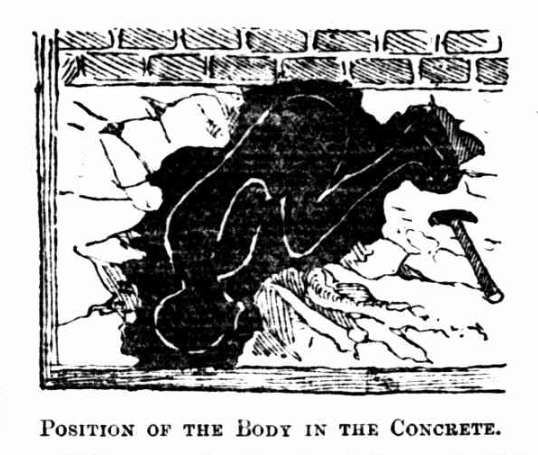
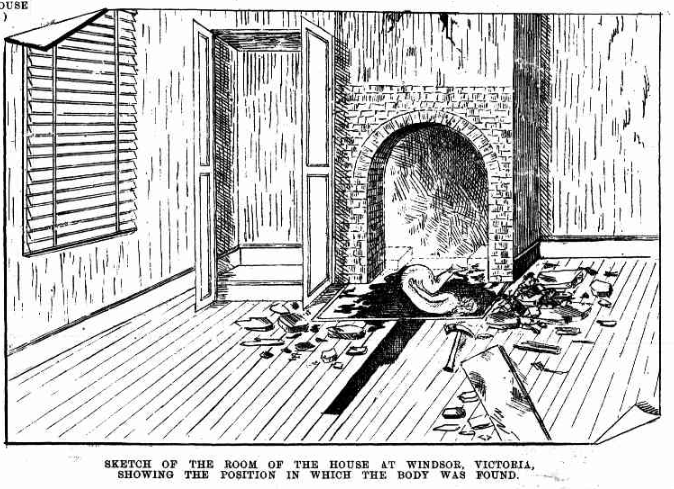
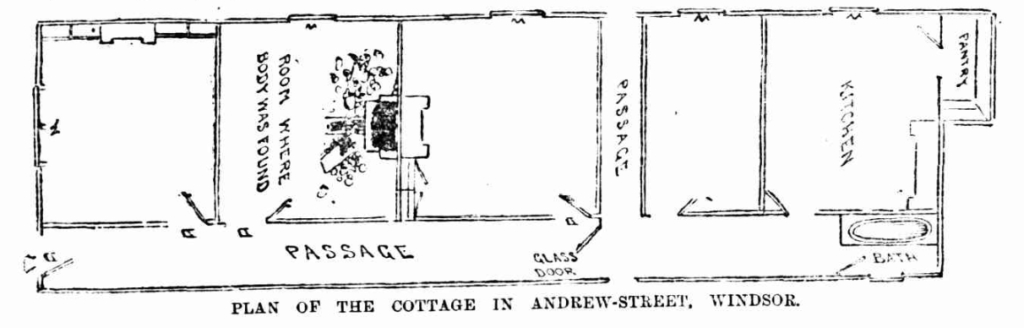
The man who had occupied the house had vanished. But not without leaving traces.
Witnesses recalled a well-dressed man, fond of jewellery, who had arrived with a woman and then disappeared shortly after Christmas. Laundry records, shipping manifests, and chance encounters began to build a picture. The name he had used was “Williams.” From there, the investigation spread outward, linking fragments of information across cities and continents.
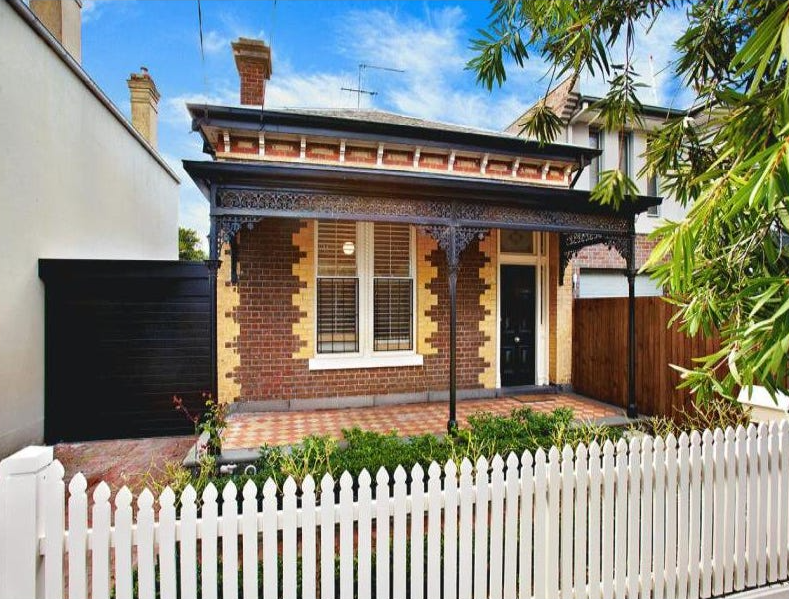
In Sydney, detectives recognised the description almost immediately. “Williams,” they realised, was Frederick Deeming—the quiet plumber from Riley Street.
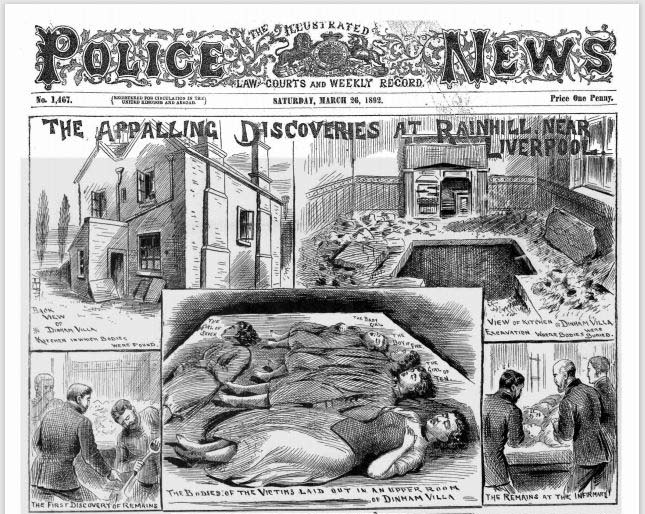
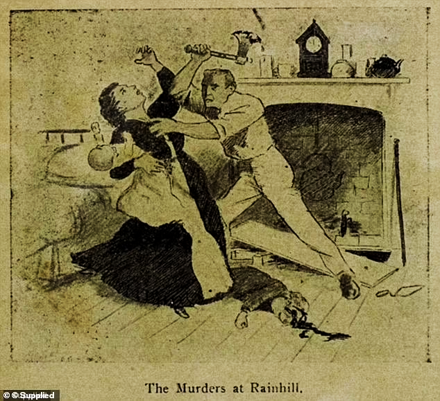
As the investigation deepened, the full extent of his crimes began to emerge. In England, at a place called Rainhill, police searched a house he had previously occupied. There, beneath the floor, they made a discovery that surpassed even the horror of Windsor. The bodies of a woman and four children had been buried in the same manner—encased in cement, concealed beneath the house. They had been murdered with similar brutality.
It was then that the story of Riley Street took on a far darker meaning.
Those children buried in Rainhill were not strangers.
They were his children.
The same children who had lived with him in Darlinghurst. The same children who had played in the narrow streets off Riley Street, who had been part of an ordinary Sydney household, and whose lives had once seemed as unremarkable as their father’s.
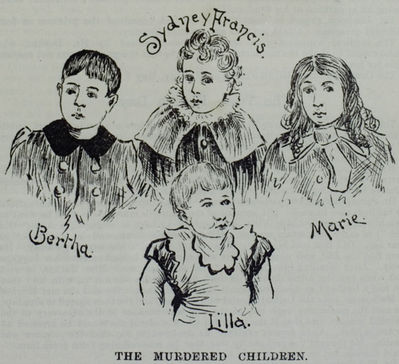
And yet, years later, their father had abandoned them and their mother to start a new life in England, marrying another woman in an act of bigamy. When the young, destitute family finally tracked him down and discovered his new life, Deeming cruelly murdered them all, including his youngest, who was 18 months old.
The realisation transformed the entire narrative. The family life on Riley Street was not a stable foundation, but a stage in a longer, more sinister pattern. Deeming did not simply deceive women or abandon relationships; he erased them. When his family became an obstacle—when they stood in the way of new identities and new marriages—he eliminated them with chilling efficiency.
The pattern repeated itself.
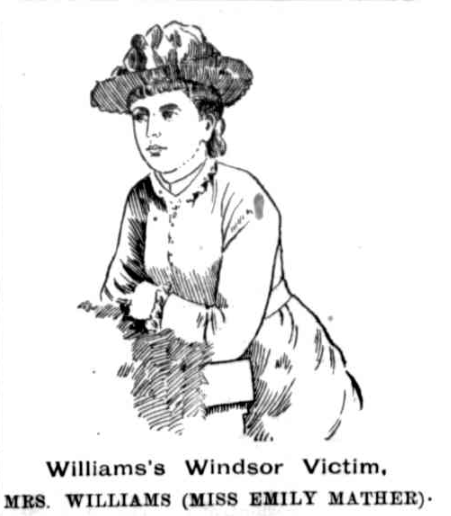
In Melbourne, the victim at Windsor—Emily Mather, a native of Rainhill, England—had been courted, married, and murdered within a matter of weeks. Even after burying her beneath the hearthstone, Deeming moved on, travelling openly and beginning yet another courtship. On a voyage to Sydney, he met a young woman and proposed marriage, presenting himself once again as a man of wealth and opportunity. Only the discovery of the Windsor body prevented her from becoming his next victim.
Deeming was eventually tracked across Australia, identified through witness testimony and correspondence, and arrested on 12 March 1892 at the South Cross goldfields in Western Australia. He had been living under the alias “Swanston” and working at the Southern Cross mine when police, acting on information passed from Melbourne through Sydney and Bathurst investigators, identified and captured him. He was extradited to Victoria.
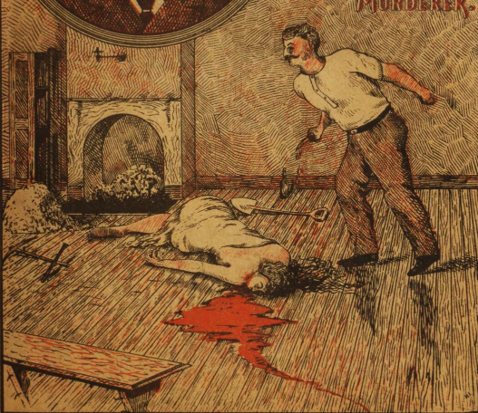
In late March, the coronial investigations into Frederick Deeming’s crimes revealed a pattern of calculated and extraordinarily brutal murders. At the Windsor inquest in Melbourne, evidence showed that Emily Mather had been murdered inside the cottage at 57 Andrew Street, Windsor, shortly after Christmas 1891. Her body was discovered buried beneath the hearthstone in a shallow grave packed with cement. Medical evidence indicated that her throat had been cut and her skull violently crushed, likely with a heavy blunt instrument. The concealment of the body beneath the floor demonstrated considerable planning, with Deeming having purchased cement and arranged the house to delay suspicion.
The later inquest at Rainhill, England, uncovered an even more horrifying scene. Beneath the floor of Denham Villa were the decomposed bodies of Deeming’s wife, Marie (Miriam) Deeming, and their four children: Bertha, Marie, Sidney, and Leighton. Evidence suggested the victims had been murdered separately and then buried beneath the house in cement-lined graves. The eldest child, Bertha, was believed to have been strangled, while the youngest child suffered catastrophic head injuries consistent with having its skull smashed against a hard surface. Marie Deeming’s throat had been cut, and the bodies of the children showed signs of suffocation, strangulation, and blunt force trauma. The inquests established that Deeming had likely killed the family in stages before calmly continuing his double life and marrying Emily Mather shortly afterwards. Together, the inquests transformed Deeming from a suspected wife-killer into one of the most infamous serial murderers of the Victorian era.
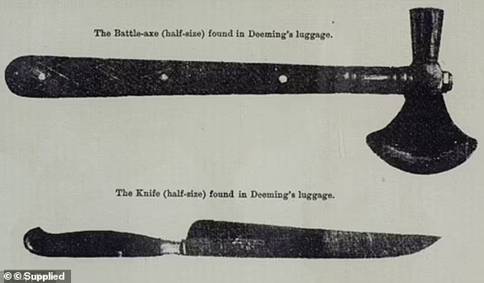
Frederick Deeming’s trial for the murder of Emily Mather commenced in Melbourne in April 1892 and quickly became one of the most sensational criminal proceedings of the Victorian era. The Crown presented overwhelming evidence linking Deeming—who had used aliases including Williams, Lawson, and Swanston—to the rented cottage at 57 Andrew Street, Windsor, where Emily Mather’s body had been discovered buried beneath the hearthstone in cement. Witnesses traced his movements across Melbourne, Sydney, and Western Australia, while evidence from England connected him to the earlier Rainhill murders of his wife, Marie Deeming, and their four children. The careful purchase of cement and sand, the preparation of the shallow grave beneath the floor, and Deeming’s attempts to conceal his identity demonstrated a calculated and methodical crime.
The defence, led by Alfred Deakin, attempted to argue that Deeming was insane. Medical witnesses described alleged epileptic fits, hallucinations, memory blackouts, and a family history of mental illness. Deeming himself delivered one of the most bizarre speeches ever heard in a colonial courtroom, insisting that Emily Mather was still alive and claiming that she had somehow participated in the Rainhill murders. He alternated between portraying himself as a persecuted innocent and recounting strange stories of his travels, illnesses, and supposed delusions. Despite the dramatic insanity defence, the jury remained unconvinced. After deliberating for just over an hour, they returned a verdict of guilty on 25 April 1892. Justice Hodges, looking upon Deeming “with withering contempt,” refused to deliver a lengthy address, stating he intended only to pass the “bare sentence” of the court. Deeming responded with a strangely cheerful “Thank you” before being led from the dock and sentenced to death.
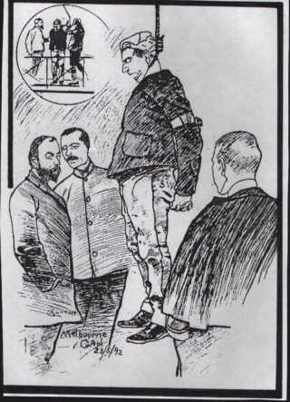
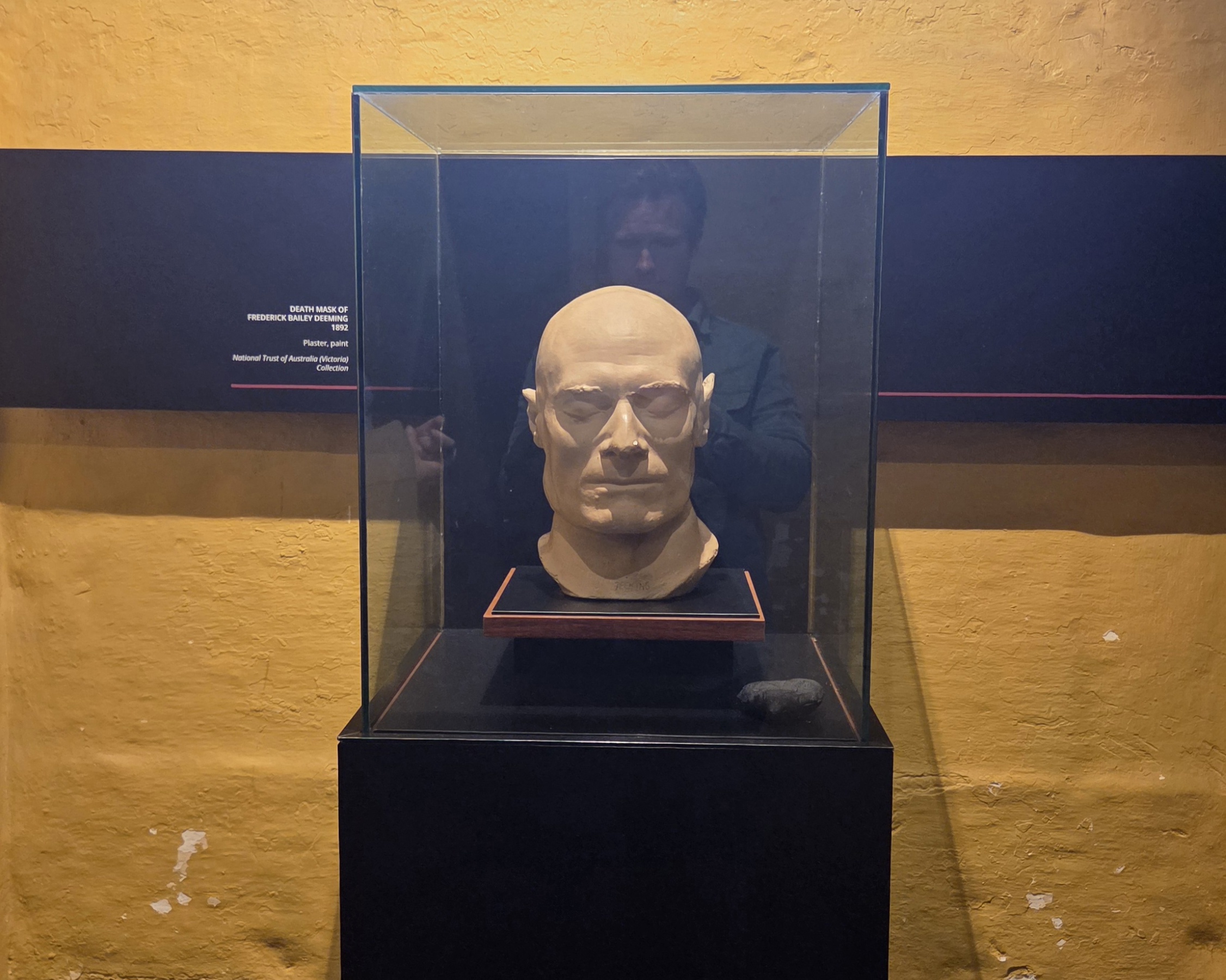
In the final days before his execution at Melbourne Gaol on 23 May 1892, Frederick Deeming appeared to undergo a dramatic physical and emotional collapse. The boastful and theatrical figure who had dominated the coroner’s inquest and Supreme Court trial became pale, trembling, and deeply distressed as death approached. Prison chaplains described him as exhausted and mentally tormented, spending much of his remaining time in prayer, writing letters, drafting wills, and obsessively pleading for one final meeting with Kate Rounsefell, a young woman he had become infatuated with before his arrest. Although he continued publicly denying responsibility for the murder of Emily Mather, he made what was effectively his closest confession to the Rainhill murders during prayer, asking God to forgive him for “having despatched my family without warning.”
On the morning of his execution, Deeming was so physically weakened that he had to be supported to the gallows. When the sheriff asked if he wished to make a final statement, witnesses heard only a faint murmur, which some interpreted as “Lord receive my spirit.” Moments later, the trapdoor opened, killing him instantly by breaking his neck. Following the hanging, a formal inquest confirmed the lawful execution of “Albert Williams,” one of Deeming’s many aliases. Phrenologists and waxwork agents later examined his body before being buried in quicklime within the gaol yard. The extraordinary public fascination surrounding the murders continued long after his death, fuelled by the bizarre claims he made in prison writings, his contradictory confessions, and the sensational theory that the quiet former resident of Riley Street, Darlinghurst, may have been none other than Whitechapel murderer.
Some suggested that Frederick Deeming was not merely a murderer, but the murderer—the figure who had terrorised London just a few years earlier. The crimes in Whitechapel, attributed to the unknown killer known as Jack the Ripper, bore certain similarities: brutality, cunning, and the ability to evade capture.
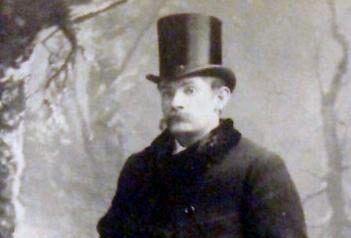
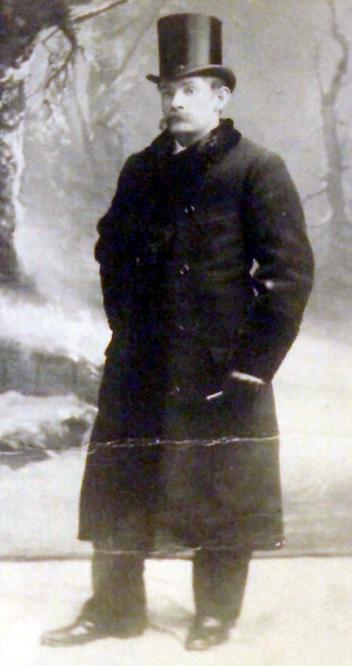
The claims linking Frederick Deeming to Whitechapel murders were based largely on circumstantial observations, speculative testimony, and sensational press reporting rather than direct evidence. Contemporary newspapers noted that Deeming had reportedly travelled to London on weekends during periods associated with some of the Whitechapel murders, and his known capacity for brutal violence, deception, and mobility across continents made him an attractive suspect in the public imagination. Reports reproduced witness descriptions of “Jack the Ripper” gathered during the Whitechapel investigations, particularly testimony from a greengrocer’s carter named Frank Ruffell, who described seeing a suspicious man leaving the scene of an attack in George Street, Whitechapel. The man was described as being around thirty years old, wearing a dark suit and black felt hat, with a moustache cut square at the ends. Newspapers suggested similarities between this description and Deeming’s appearance. Additional speculation came from Deeming’s own lawyers and medical advisers during his Melbourne trial, who hinted that further psychiatric examination might reveal a confession connecting him to the Ripper crimes, though no such confession was ever made. Ultimately, the theory rested on parallels in brutality, timing, aliases, and Deeming’s international movements rather than on any definitive witness identification or physical proof.
The suggestion that he might be connected to the Whitechapel murders captured the imagination of the public. Newspapers speculated, lawyers hinted, and the idea took on a life of its own. Others dismissed it, pointing to inconsistencies in dates and locations. Even at the time, the theory was controversial and widely debated.
And yet, it refused to disappear entirely.
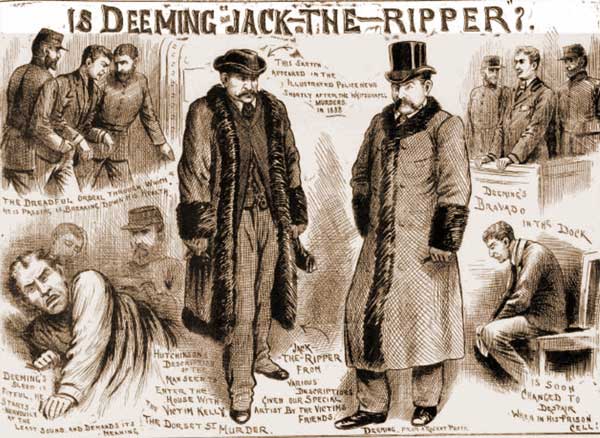
Because if it were true—or even possible—then the implications are extraordinary. It would mean that one of the most infamous killers in history had not only passed through Sydney but had lived quietly in its inner suburbs. That the man who raised a family on Riley Street and who courted a barmaid in the Woollahra Hotel was Jack the Ripper!
In The Devil’s Work, Garry Linnell argues that Frederick Deeming is one of the strongest historical suspects for the identity of Whitechapel murders due to a combination of timing, behaviour, and psychology rather than direct evidence. Linnell points out that Deeming was in England during the period of the Whitechapel murders, travelled constantly under aliases, and possessed a proven capacity for extreme violence against women and children. He argues that Deeming’s manipulative personality, hatred of women, double lives, compulsive lying, and ability to calmly move on after murder resemble the characteristics later associated with organised serial killers. Linnell also notes that speculation linking Deeming to Jack the Ripper existed as early as the 1890s, particularly after the gruesome Rainhill murders revealed his brutality. While acknowledging there is no definitive proof, Linnell suggests that Deeming’s movements, personality, and criminal escalation make him a compelling and plausible suspect.
There is no definitive answer. History often leaves us with fragments and possibilities rather than certainty. Yet the story of Frederick Deeming—traced from Darlinghurst to Rainhill and Windsor—raises a deeply unsettling question. Was Deeming in any way responsible for the barmaid, Annie Spain’s death?
The evidence is limited: she died at just 21 years of age, her funeral was held on 29 November 1886, just three months after she discovered the truth about Deeming. Nothing more is recorded that would conclusively link him to her death. Yet, in light of what is now known about his capacity for violence, the possibility is difficult to ignore. How could a young woman die of a “broken heart” as witnesses have suggested? The timing is striking, particularly as it coincides with the birth of one of Deeming’s children. Did he kill her to keep her quiet?
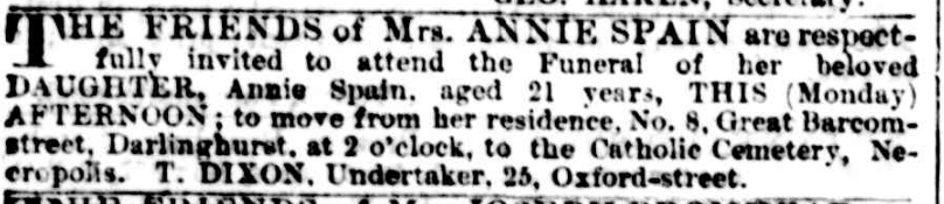
We may never know the truth. But for a time, at least, a man capable of extraordinary brutality lived an apparently ordinary life on Riley Street, Darlinghurst, drank in the local hotels and walked the local streets with the family he would eventually murder. Another strange chapter in the history of Darlinghurst.
Sources:
- Australian Star (Sydney, NSW), “Windsor Murder: ‘The Ripper’ Theory. The Whitechapel Horrors,” 18 March 1892, 5.
- Evening News (Sydney, NSW), “ ‘Williams’ in Sydney,” 19 March 1892, 5.
- Evening News (Sydney, NSW), “His Birthplace,” 19 March 1892, 5.
- Evening Journal (Adelaide, SA), “The Scoundrel’s Work at Woollahra,” 12 April 1892, 3.
- Adelaide Observer (Adelaide, SA), “The Scoundrel’s Work at Woollahra,” 16 April 1892, 34.
- Leader (Melbourne, Vic.), “The ‘Ripper’ Theory,” 30 April 1892, 26.
- Argus (Melbourne, Vic.), “The Windsor Murder Trial: A Review of the Proceedings,” 3 May 1892, 5.
- Argus (Melbourne, Vic.), “The Windsor and Rainhill Murders: Deeming’s Execution,” 24 May 1892, 5.
- National Advocate (Bathurst, NSW), “Deeming’s Death,” 24 May 1892, 2.
- Linnell, Garry. The Devil’s Work: The Strange and True Story of the Notorious Deeming Murders. Melbourne: Victory Books, 2014.