
By Elliot Lindsay
The Lane Cove Mystery and the Case of Eugene Falleni (Harry Crawford)
Stringybark Creek Reserve, Lane Cove
Today, Stringybark Creek Reserve is one of Sydney’s hidden pockets of bushland. Tucked between Epping Road and the Lane Cove West industrial precinct, the reserve is popular with walkers seeking a peaceful escape from the surrounding suburbs. Towering eucalypts shade winding bush tracks, while moss-covered sandstone ledges and shallow caves overlook the Lane Cove River. Fig trees cling to cracks in the rock, creating the impression of an ancient landscape that has survived untouched amidst the expanding city. It is difficult to imagine that such a tranquil setting was once the scene of one of Australia’s most extraordinary and enduring criminal mysteries.
The Burnt Remains
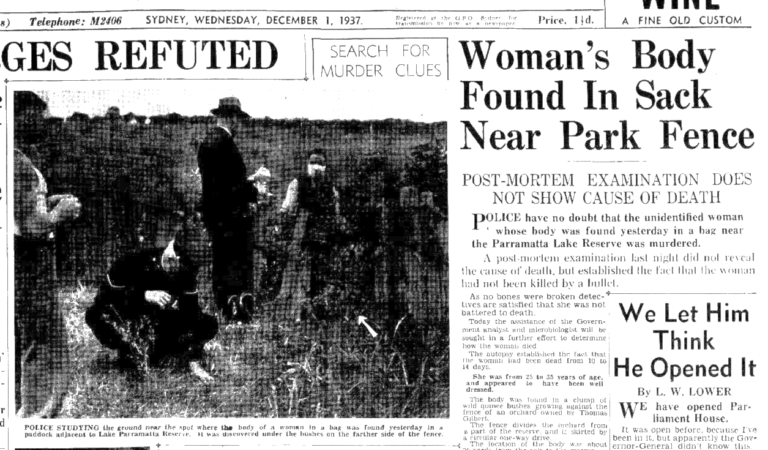
At approximately 10.30 a.m. on Tuesday, 2 October 1917, an employee from the nearby Cumberland Paper Board Mills was walking through the reserve when he noticed a blackened patch of earth beside the track. Curious, he approached for a closer look. Scattered amongst the ashes were fragments of bone. Police were quickly summoned, and the horrifying truth emerged. Someone had attempted to destroy a human body by fire.
The scene that confronted detectives was both disturbing and perplexing. The victim had been almost entirely consumed by the flames. Only fragments of bone, a badly damaged skull, a pair of women’s shoes, a small green gemstone and an enamel mug remained. Nearby lay an empty bottle that had contained kerosene, apparently used to fuel the blaze. There were no witnesses, no obvious signs of a struggle and nothing to conclusively explain how the woman had died before—or perhaps during—the fire.
Without the benefit of fingerprints, DNA analysis or modern forensic techniques, investigators were left to piece together the victim’s identity from the few possessions that had survived the flames. Murder seemed an obvious possibility, yet the evidence was far from conclusive. Several local residents reported seeing a distressed young woman wandering alone through the bushland in the days leading up to the discovery, prompting the coroner to consider whether the victim may have taken her own life by self-immolation. The possibility was horrifying, but it could not be dismissed. Equally, there was nothing to eliminate the prospect of murder.


Newspapers across Australia quickly dubbed the case the “Lane Cove Mystery.” Hoping someone might recognise the victim, police released photographs of the distinctive shoes recovered from the scene. The appeal generated considerable public attention, but no one came forward with a positive identification. Instead, the investigation revealed another troubling reality. Families from across Sydney began contacting police, fearing the unidentified woman might be a missing daughter, sister or wife. One after another they examined the recovered belongings, desperately hoping for answers. One after another they left disappointed. The remains could not be matched to any of the women they sought.
With no confirmed identity, no suspect and little physical evidence, the investigation gradually lost momentum. The unidentified woman was buried, the exhibits were placed into storage, and the Lane Cove Mystery slipped into the growing list of unsolved crimes that haunted early twentieth-century Sydney. For almost three years it appeared that the truth had died with the victim.
Then, in the winter of 1920, a young labourer named Harry Birkett walked into a police station carrying a story that would breathe life back into the forgotten investigation. He believed the woman discovered in the ashes was his mother. More remarkably, he believed he knew the person responsible for her death.
The Missing Mother
For almost three years, the Lane Cove Mystery remained exactly that—a mystery. The unidentified woman’s belongings were carefully stored away, the investigation was quietly shelved, and detectives turned their attention to newer cases. Had it not been for one young man’s determination to uncover the truth about his missing mother, the case would almost certainly have been forgotten.
Harry Birkett was just seventeen years old when he began asking questions about his mother, Annie. Like many working-class children in early twentieth-century Sydney, Harry had entered the workforce at a young age, leaving school at thirteen to help earn a living. Life had been difficult, but he had always believed there would be an opportunity to reconnect with his mother. She had disappeared from his life several years earlier, and he had accepted the explanation given to him at the time—that she had left to live with relatives in Kogarah. It was an explanation that seemed plausible enough, particularly as Annie’s marriage to his stepfather, Harry Crawford, had become increasingly unhappy.
In June 1920, Harry decided the time had come to find her. Travelling to Kogarah, he called upon his aunt expecting that she would know where Annie was living. Instead, he received a response that left him stunned. His aunt was delighted to see him but immediately asked why Annie had not accompanied him. She assumed Annie was still living with her son, just as Harry had assumed Annie was living with her sister. In an instant, both realised something was terribly wrong. Annie Birkett had vanished years earlier, and neither side of the family had known she was missing.
The revelation forced Harry to revisit memories he had long pushed aside. Looking back, the events surrounding his mother’s disappearance no longer seemed merely unusual—they appeared deeply sinister. He recalled leaving home for the long weekend beginning Saturday, 29 September 1917, returning on the evening of Monday, 1 October. It was then that Harry Crawford informed him Annie had left to live with friends on Sydney’s North Shore. Although the explanation surprised him, it was not entirely unbelievable. The couple had argued frequently, and Annie had often spoken of leaving. Yet something about Crawford’s behaviour in the days that followed never sat comfortably with the young man. Crawford appeared agitated, drank heavily and behaved in ways Harry struggled to understand.

The following morning, Crawford unexpectedly suggested they spend the day together. The pair travelled to Circular Quay, boarded the ferry across Sydney Harbour and made their way to Watsons Bay. From there they walked to the towering sandstone cliffs known simply as The Gap. Even in 1917, the dramatic headland was infamous as a place where despairing people came to end their lives. As they stood overlooking the crashing surf below, Crawford climbed over the safety barrier and edged alarmingly close to the precipice. He began throwing stones into the ocean before beckoning Harry to join him. The teenager refused. There was something deeply unsettling about the invitation, and he instinctively kept his distance. Years later, the memory would haunt him.
Over the following days, Crawford moved himself and Harry into a boarding house at 103 Cathedral Street, Woolloomooloo. It was there that another incident would later assume extraordinary significance. One morning, Crawford approached his stepson carrying a newspaper. Unable to read or write, he asked Harry to read aloud an article describing the discovery of the burnt woman’s body at Lane Cove. The report included a photograph of the shoes found beside the remains. Crawford listened intently, interrupting only to ask what the newspaper said about the footwear. Harry thought the request odd at the time, but he never forgot the intense interest Crawford displayed. When the article was finished, Crawford appeared visibly disturbed.
The strangest episode of all occurred only a few nights later. During a violent thunderstorm, Crawford produced a brand-new shovel and insisted Harry accompany him to Bellevue Hill. The pair arrived at an isolated property where Crawford ordered the bewildered teenager to begin digging. As lightning illuminated the darkness and rain lashed the hillside, Harry excavated what he later described as a grave-sized hole. Crawford stood nearby in silence, occasionally taking swigs from a flask of brandy as he watched the boy work. When the pit reached a depth of about four feet, Crawford suddenly became emotional. Without explanation, he ordered Harry to stop. Taking the shovel, Crawford tossed it aside and instructed him to return home. No object was ever placed in the hole, and no explanation was ever given for why it had been dug. At the time Harry dismissed the bizarre episode as another example of his stepfather’s unpredictable behaviour. Only years later did it acquire a far darker significance.
Not long afterwards, Crawford abandoned both the boarding house and his stepson. Harry would later learn that his former stepfather had remarried and was living elsewhere under the same name. Although Crawford had never physically abused him, Harry remembered the growing hostility that had developed between them after Annie disappeared. Looking back, each strange incident—the unexplained trip to The Gap, the obsessive interest in the newspaper photograph, the midnight excavation at Bellevue Hill and Crawford’s increasingly erratic behaviour—seemed to form part of a much larger puzzle.
By the winter of 1920, Harry could no longer dismiss those memories as a coincidence. Convinced that the unidentified woman found beside the Lane Cove River was his mother, he approached detectives and told them everything he knew. It was a decision that would resurrect one of Sydney’s most perplexing unsolved cases—and place Harry Crawford at the centre of a murder investigation that would soon captivate the entire nation.
The Investigation Reopened
When Harry Birkett walked into a Sydney police station in late June 1920, detectives were immediately struck by the detail of his story. Although nearly three years had passed since the discovery of the charred remains at Lane Cove, Harry’s recollections of the strange events surrounding his mother’s disappearance were vivid and remarkably consistent. More importantly, he believed he could identify the few possessions recovered from the scene. If he was right, the anonymous woman who had become known only as the victim of the Lane Cove Mystery finally had a name.
Police wasted little time retrieving the exhibits that had been carefully preserved since October 1917. The burnt shoes, the small green gemstone and the enamel mug were produced from storage and shown to the young labourer. Harry recognised each item immediately. He identified the shoes as belonging to his mother, Annie Birkett, even recalling that his stepfather, Harry Crawford, had once repaired one of them. The green stone had been part of her jewellery, while the enamel mug was another familiar household possession. Individually, the objects proved little, but together they painted a compelling picture. For detectives, it was the first substantial lead the investigation had produced in almost three years.
The renewed inquiry quickly shifted its attention to Crawford. Harry’s account of his stepfather’s behaviour following Annie’s disappearance—the unexplained visit to The Gap, the obsessive interest in the newspaper photograph of the victim’s shoes, the mysterious excavation at Bellevue Hill and his increasingly erratic conduct—suggested far more than coincidence. Detectives began tracing Crawford’s movements since 1917 and soon discovered he had quietly rebuilt his life. Annie had disappeared, Crawford had remarried, and there had been no attempt to report his wife missing. The circumstances were difficult to ignore.
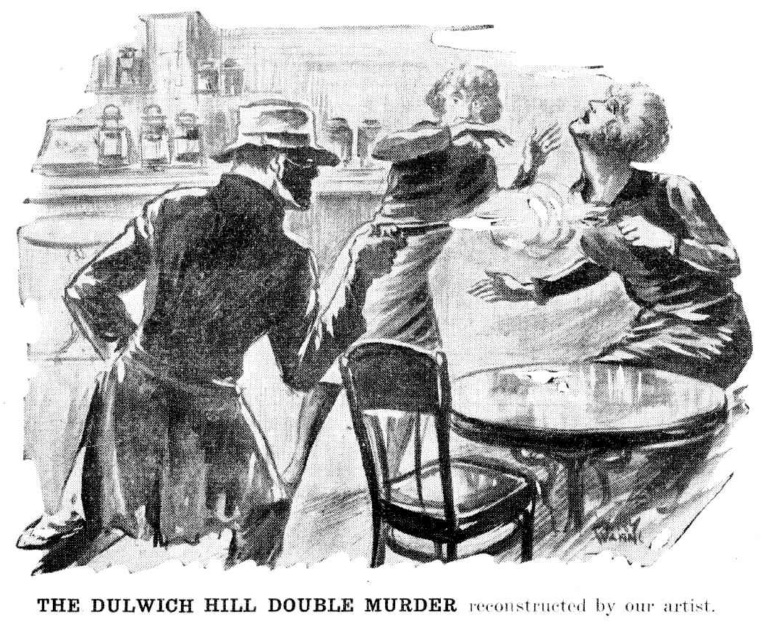
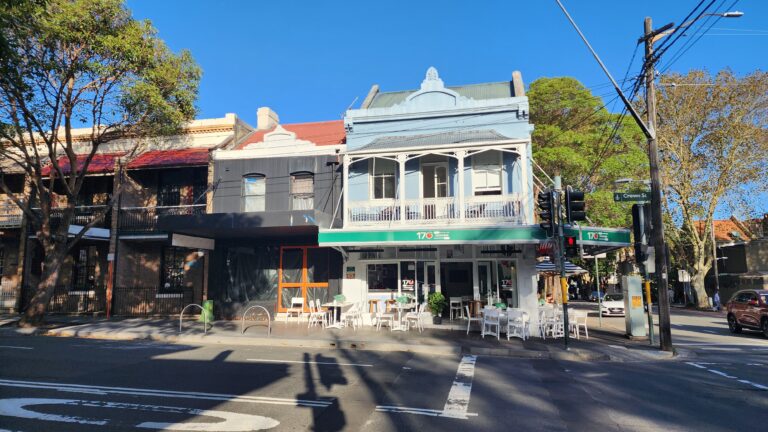
On 5 July 1920, police arrested Harry Crawford at the Empire Hotel on Parramatta Road, Annandale. He was charged with the murder of Annie Birkett and taken into custody pending further investigation. Newspapers quickly seized upon the dramatic development. The forgotten Lane Cove Mystery had suddenly become front-page news once again, and public interest intensified as details of Harry Birkett’s evidence began to emerge. Many assumed the case was now little more than a formality. Detectives had identified the victim, located a suspect and uncovered a series of suspicious events that appeared to link him to the crime. Yet the investigation was about to take an extraordinary turn that no one—not even the police—could have anticipated.
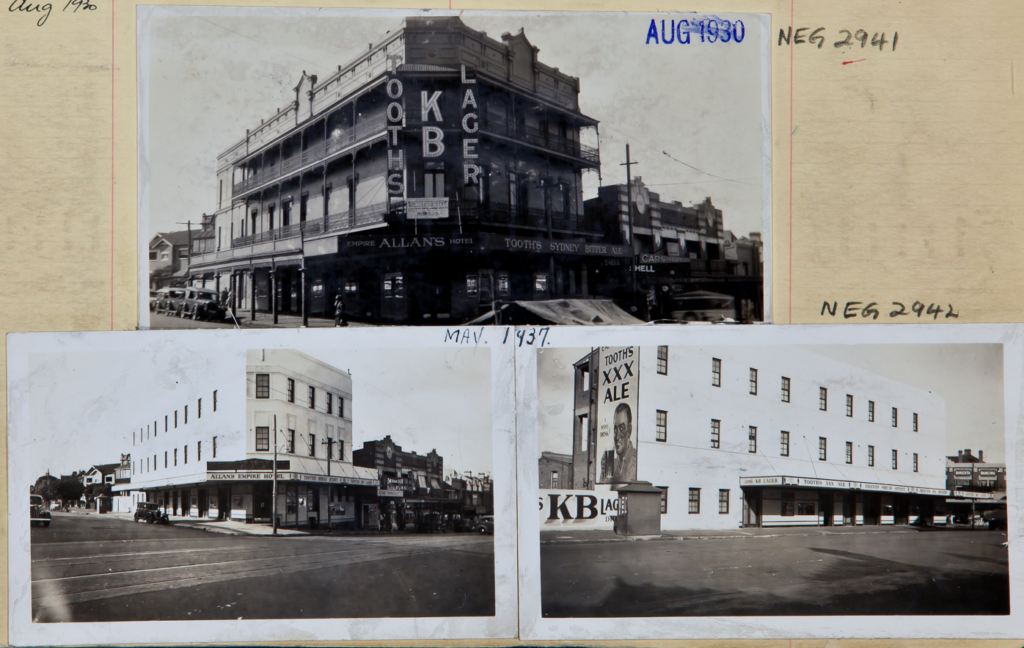
While being processed after his arrest, Crawford remained calm and continued to insist that he was an ordinary working man. He identified himself as Harry Leo Crawford, claimed to have been born in Scotland and denied any involvement in Annie Birkett’s disappearance. Detective-Sergeant Dobson noted nothing particularly unusual during the initial questioning. It was only after Crawford was examined by the Government Medical Officer, Dr Palmer, that the remarkable secret at the centre of the case began to unravel.

According to Dr Palmer’s testimony, Crawford appeared anxious about the practicalities of imprisonment rather than the murder allegation itself. He asked what would happen to him in gaol and was told that, like every prisoner, he would be bathed and issued prison clothing. Crawford then quietly requested to be placed in the women’s section of the prison. When Dr Palmer dismissed the suggestion, believing it to be some kind of joke, Crawford asked him to step aside.
Leaning close so that nobody else could hear, Crawford whispered words that instantly transformed the investigation. “I am a woman.”
Dr Palmer later recalled that Crawford added quietly, almost with relief, “This has been a terrible thing for me; it’s been the worry of my life.”
The confession stunned police. For years, Harry Crawford had lived entirely as a man. Employers, neighbours, friends and even wives had accepted him without question. Now, as detectives hurried to verify the extraordinary claim, they discovered that Harry Crawford had, in fact, been born Eugenia Falleni, an Italian immigrant who had spent much of her adult life presenting as male. Almost overnight, what had begun as a murder investigation became one of the most sensational stories in Australian history.
The press abandoned the restrained language that had characterised the reopening of the Lane Cove case. Newspapers became obsessed with Crawford’s identity, splashing headlines about the “Man-Woman” across their front pages and devoting column after column to intimate details of Falleni’s private life. Public curiosity became a frenzy. Long before the evidence of Annie Birkett’s death had been tested in court, the accused had become a national spectacle.
In many respects, the murder investigation had been eclipsed. Instead of asking whether Harry Crawford had killed Annie Birkett, much of the public appeared more fascinated by a different question entirely: how had someone born female managed to live as a man for more than twenty years without being discovered?
Lost beneath the sensational headlines was the central question that detectives had set out to answer.
What really happened to Annie Birkett in September 1917?
The Secret Life of Harry Crawford
The revelation stunned Sydney.
Within hours of Harry Crawford’s arrest, detectives had confirmed that the man accused of murdering Annie Birkett had, in fact, been born Eugenia Falleni in Florence, Italy, in 1875. For more than two decades, Falleni had lived almost exclusively as a man. Employers knew Harry Crawford. Friends knew Harry Crawford. Two wives believed they had married Harry Crawford. Now the police had uncovered an identity that had remained hidden for years, and the newspapers seized upon it with an enthusiasm that bordered on obsession.
Today, more than a century later, historians generally accept that Falleni lived as what we would now describe as a transgender man, although the language and understanding surrounding gender identity simply did not exist in the early twentieth century. Whether Falleni understood their identity in those terms is impossible to know. Throughout the surviving records, Falleni never attempted to explain why they chose to live as a man. What remains is a fragmented life story pieced together from court testimony, police interviews and newspaper reports.
Eugenia Falleni was born in Florence before emigrating with her family to New Zealand in 1877. From an early age, she rejected the expectations placed upon girls and instead preferred masculine clothing, masculine work and the freedom afforded to boys. Those preferences became more pronounced during adolescence until, while still in her teens, she left New Zealand altogether. Disguising herself as a boy, she secured work aboard merchant vessels as a cabin hand, embracing a life almost unimaginable for a young woman during the Victorian era.
It was an extraordinary deception, but one that could never last indefinitely.
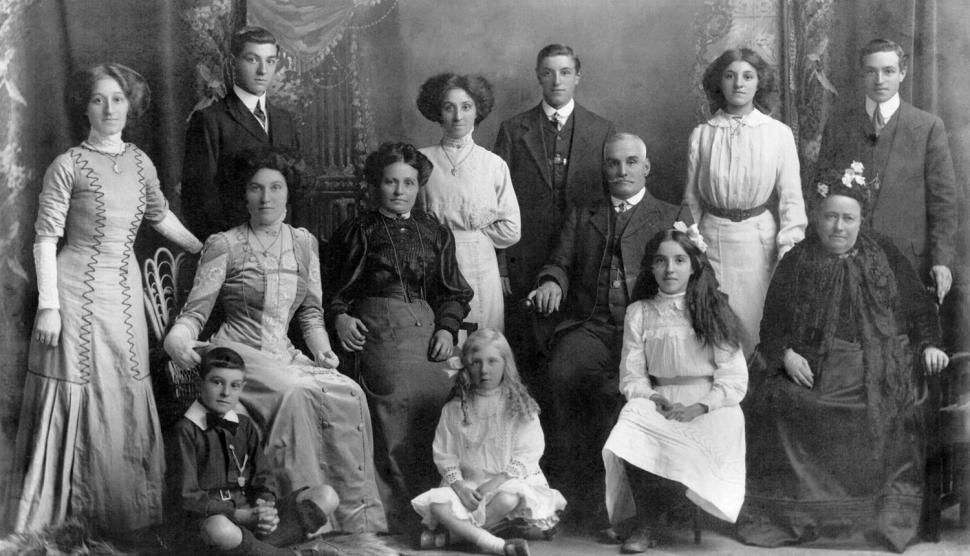
According to evidence later presented in court, the captain of one vessel eventually discovered Falleni’s biological sex after a simple grammatical mistake during a conversation in Italian. Recalling childhood, Eugenia referred to herself using the feminine word piccolina—”little girl”—rather than the masculine piccolino. The single word immediately betrayed the identity she had carefully concealed.
What followed was tragic.
Contemporary accounts alleged that, after her identity was exposed, Falleni was sexually assaulted by the ship’s captain and became pregnant. When the vessel reached Newcastle, in the Colony of New South Wales, she was forced ashore. In 1898 she gave birth to a daughter, Josephine, who was placed in the care of a wealthy Italian family in Sydney. Whatever hopes or ambitions Eugenia may once have held had been shattered. Yet rather than abandon the male identity she had constructed, she embraced it completely.
From that point onwards, Harry Leo Crawford became more than an alias.
It became a life.
Over the next two decades Crawford worked in occupations traditionally reserved for men, moving between jobs across New South Wales and Victoria. Neighbours, employers and acquaintances consistently described Crawford as industrious, quiet and capable. Few, if any, suspected that anything was unusual. By every outward appearance, Harry Crawford was simply another working man making a living in a rapidly growing Australia.
That life eventually brought Crawford to Wahroonga, where employment was found with the prominent physician Dr Gother Robert Carlisle Clarke. Annie Birkett also worked in Dr Clarke’s household, and it was here, around 1915 or 1916, that the pair became acquainted. Their employer soon enlisted with the 34th Battalion during the First World War and departed for the Western Front, where he was killed in action. With the household dissolved, Crawford and Annie Birkett left Dr Clarke’s employment and began a relationship that would ultimately lead to marriage.
To those around them, they appeared to be an ordinary working-class couple trying to establish a new life together. Annie already had a teenage son, Harry Birkett, while Crawford brought stability, employment and companionship. Yet beneath the surface, the relationship was far from harmonious. Witnesses later described frequent arguments, periods of separation and an increasingly volatile domestic life. Harry Birkett would later tell the court that his mother often seemed worn down by Crawford’s persistent demands and jealous temperament.
Exactly what Annie knew about Crawford’s past remains one of the enduring mysteries of the case.
The prosecution would later argue that Annie had eventually discovered Crawford’s biological sex and threatened to expose the deception, providing a motive for murder. The defence rejected the claim, arguing there was no direct evidence that Annie had only recently learnt the truth. Modern historians have gone further still. Some have suggested Annie may have known long before they married and simply chose not to reveal it. Others have proposed that friends or relatives may also have suspected Crawford’s secret but regarded it as a private matter rather than a public scandal. The historical record simply does not provide a definitive answer.
What is clear is that by September 1917, the marriage had deteriorated significantly.
Then Annie disappeared.
Three days later, an unidentified woman’s body was found burning in the bushland beside the Lane Cove River.
Whether those two events were connected beyond reasonable doubt would become one of the most fiercely contested questions ever argued before a New South Wales jury.
The Trial that Captivated Australia
By the time Harry Crawford appeared before the Sydney Central Police Court on 16 August 1920, the case had already become one of the most sensational criminal investigations in Australian history. Yet remarkably, public fascination centred less on the allegation of murder than on the identity of the accused. Newspapers devoted column after column to Crawford’s private life, describing every detail of the discovery that the accused had been born female. Crowds gathered outside the courthouse hours before proceedings began, eager to catch a glimpse of the individual the press had christened the “Man-Woman.” What should have been a murder hearing increasingly resembled a public spectacle.
Crawford, represented by the prominent criminal defence solicitor E. Maddocks Cohen, appeared impeccably dressed in a dark suit and hat. Throughout the proceedings the accused remained composed, listening quietly as witness after witness reconstructed the final weeks of Annie Birkett’s life. The Crown’s challenge was formidable. There was no confession, no eyewitness to the alleged murder, no murder weapon and no scientific evidence capable of proving exactly how the victim had died. Everything rested upon a chain of circumstantial evidence that, taken together, prosecutors argued pointed irresistibly towards Crawford’s guilt.
The prosecution’s first major witness was Harry Birkett, whose decision to approach police had reopened the forgotten investigation. Speaking calmly, the young labourer described the increasingly troubled relationship between his mother and Crawford. The marriage, he explained, had been characterised by frequent arguments and periods of separation. Annie often appeared exhausted by Crawford’s persistent attempts at reconciliation.
“After we left there,” Harry told the court, “the accused persisted in worrying my mother so much that she practically had to marry him.”
He recalled numerous quarrels while the family lived at 231 Darling Street, Balmain, followed by further disputes after moving to Austral Street, Kogarah. On one occasion, Crawford smashed household furniture during a particularly heated argument. Although Harry admitted he had never seen his mother intoxicated, he described Crawford as increasingly volatile and controlling during the months leading up to her disappearance. His testimony established a picture of domestic tension that prosecutors argued provided the motive for murder.
Yet it was another witness whose evidence would leave the greatest impression upon the courtroom.
Mrs Eliel Irene Carroll, of Longueville, had no connection whatsoever to Annie Birkett or Harry Crawford. On Friday, 28 September 1917, the day prosecutors alleged Annie disappeared, she had simply gone walking near the bush tracks overlooking the Lane Cove River, close to the Cumberland Paper Board Mills. As she approached a rocky outcrop, she noticed a solitary man sitting with his head buried in his hands.
The stranger immediately startled her.
“He appeared to be excited,” she told the court. “He seemed nervous, and he jumped and looked up when I came upon him.”
Mrs Carroll observed that the man was staring across the valley towards the very location where Annie Birkett’s burnt remains would later be discovered. Several hours later, as she returned along the same track, she encountered him again. This time he was wandering amongst the sandstone outcrops only a short distance from where the body would eventually be found. For several anxious minutes he walked silently behind her along the narrow bush track before disappearing down another path leading towards the secluded gully.
His behaviour unsettled her so profoundly that she mentioned the encounter to her family immediately upon returning home.
“I said to my mother I thought he was going to commit suicide,” she recalled. “I frightened him, and he frightened me.”
When detectives later organised an identification parade, Mrs Carroll unhesitatingly pointed to Harry Crawford as the man she had encountered that afternoon. Standing in the witness box almost three years later, she again identified the accused seated in the dock.
Her evidence was powerful.
But it was not conclusive.
Mrs Carroll had seen a distressed person near the crime scene on the very day Annie disappeared. Whether that individual had just committed murder, was contemplating suicide, or was simply an anxious man passing through the bush remained impossible to determine. The prosecution naturally urged the jury towards the first conclusion. The defence invited them to consider the others.
The uncertainty surrounding her testimony reflected the larger difficulty confronting the Crown throughout the trial. Every piece of evidence appeared compelling when viewed in isolation, yet almost all of it was open to alternative interpretation. The jury was repeatedly asked to decide not what might have happened, but what must have happened.
It was a distinction that would become increasingly important as the trial unfolded.
The next witness would deepen the mystery still further.
She was the former boarding-house keeper from 103 Cathedral Street, Woolloomooloo, and she had watched Harry Crawford unravel in the days immediately following the discovery of the burnt body.
The Boaring House in Woolloomooloo
Among the many witnesses called by the Crown, few left a greater impression than Mrs Schieblich, the proprietor of the boarding house at 103 Cathedral Street, Woolloomooloo. Unlike many witnesses who could only speculate about Crawford’s character or relationship with Annie Birkett, Mrs Schieblich had observed the accused almost daily during the crucial days immediately following the discovery of the burnt body at Lane Cove. Her evidence offered the jury an unsettling glimpse into what appeared to be a man steadily losing control.
Mrs Schieblich told the court that only two or three days after newspapers first reported the discovery of the unidentified woman’s remains, Harry Crawford arrived at her boarding house seeking accommodation. He requested a room with two beds and returned the following day, accompanied by his stepson, Harry Birkett. Crawford explained that his wife had left him following a domestic argument.
“We had a jolly good row,” he reportedly told Mrs Schieblich, “and I gave her a crack on the head, and she cleared out.”
At the time, the remark seemed little more than an unpleasant confession from a disgruntled husband. Three years later, after Annie Birkett had been identified as the Lane Cove victim, those words assumed a far more sinister significance. Whether Crawford had been speaking figuratively or admitting to something much darker became a question for the jury.
As the days passed, Mrs Schieblich noticed increasingly erratic behaviour. Crawford became agitated without warning, frequently appearing distracted and nervous. He repeatedly instructed both Mrs Schieblich and her husband that, should “two big fellows like policemen” arrive asking questions, they were not to admit he was staying there. The request struck her as peculiar, although she could not imagine what he believed the police might want.
She also observed Crawford destroying many of his own possessions. Several trunks were emptied into the yard, their contents sorted before unwanted items were thrown into the boiler and burned. Once the trunks themselves were no longer needed, Crawford took an axe and smashed them into pieces before disposing of the timber. At the time, it appeared little more than an unusual attempt to rid himself of unwanted belongings. Viewed through the lens of the murder investigation, however, the destruction of personal effects invited far more troubling interpretations.
One newspaper article in particular seemed to have a profound effect upon Crawford. Like thousands of Sydneysiders, Mrs Schieblich had read the reports describing the unidentified body discovered near the Lane Cove River. The newspapers included a photograph of the distinctive shoes recovered beside the remains, hoping someone might recognise them. According to Mrs Schieblich, Crawford became visibly distressed whenever the article was mentioned.
“He got more and more abnormal,” she told the court.
His anxiety soon developed into something approaching terror.
One day Crawford rushed into the kitchen in obvious panic, crying repeatedly, “Madam! Madam! Madam! I am haunted! The room is haunted!”
Mrs Schieblich had watched his increasingly disturbed behaviour for days. Convinced there was more to his agitation than simple nerves, she responded with remarkable bluntness.
“I think your wife is haunting you. I think you killed her.”
Crawford appeared stunned.
“Why do you say that?” he asked.
Mrs Schieblich later explained that she had reached the conclusion simply because of the extraordinary way he had been behaving since arriving at the boarding house. It was not an accusation based upon evidence, merely an instinct born from observing someone who appeared consumed by fear.
Her testimony became even more unsettling when she described Crawford’s relationship with Harry Birkett. According to Mrs Schieblich, Crawford frequently complained that the boy was “no good” and repeatedly expressed a desire to be rid of him. Although she never witnessed physical violence between the pair, she recalled one chilling remark.
“Some time I am going to kill him.”
Whether the statement was made in anger or represented a genuine threat was impossible to know. Nevertheless, it added another disturbing piece to the prosecution’s growing mosaic of circumstantial evidence.
Mrs Schieblich also confirmed Harry Birkett’s extraordinary account of the midnight expedition to Bellevue Hill. One stormy evening she watched Crawford leave the boarding house carrying a shovel, accompanied by the teenage boy. Concerned by the weather, she questioned why anyone would venture out on such a miserable night.
Crawford’s reply sent a chill through the courtroom.
“I am going to kill him.”
The pair eventually returned, drenched by rain, several hours later. Mrs Schieblich helped Harry dry his clothes, while Crawford offered no explanation for where they had been or why they had taken the shovel. It would not be until Harry later told detectives about digging a grave-sized hole during a thunderstorm at Bellevue Hill that her recollection assumed its full significance.
By the conclusion of Mrs Schieblich’s evidence, the courtroom had heard the testimony of two entirely independent witnesses. One had placed Crawford near the location where Annie Birkett’s body was found on the day she disappeared. The other described behaviour that many considered consistent with overwhelming guilt. Yet neither witness had actually seen Annie Birkett killed. No one had witnessed the fire. No one could even state with certainty that the burnt remains belonged to Annie herself.
The Crown’s case was undoubtedly growing stronger.
But it remained, as the defence continually reminded the jury, a case built entirely upon circumstances rather than certainty.
The next witness would introduce another layer of tragedy. She was Josephine, Eugenia Falleni’s own daughter, a young woman who had spent her childhood calling Harry Crawford “father.” Summoned to testify against the person who had raised her, she found herself torn between duty and loyalty, breaking down in tears before a crowded courtroom that had become captivated by one of Australia’s most extraordinary trials.
A Daughter Torn Between Love and Truth
By the time the committal proceedings concluded, newspapers had transformed the case into front-page entertainment. Every appearance by Harry Crawford attracted crowds, while journalists eagerly reported each new revelation about the accused’s private life. Lost amongst the sensational headlines was a simple but tragic reality: two families had been shattered. Annie Birkett’s son had spent three years believing his mother had abandoned him, while Eugenia Falleni’s own daughter now faced the impossible prospect of giving evidence against the parent she had known all her life as her father.
The Crown considered Josephine Crawford Falleni to be one of its most important witnesses. As Falleni’s biological daughter, she possessed intimate knowledge of the accused’s secret life and could potentially strengthen the prosecution’s argument that Annie Birkett had discovered Crawford’s biological sex shortly before her disappearance. Detectives had already obtained a lengthy sworn statement from Josephine during the investigation, and prosecutors anticipated that she would repeat its contents before the court.
Instead, they were met with heartbreaking resistance.
When the twenty-two-year-old entered the witness box, she was heavily veiled in an effort to avoid recognition. Throughout her evidence she struggled to maintain her composure, frequently breaking down in tears. The young woman found herself caught between two conflicting loyalties. She had been summoned by the Crown to help prosecute her parent, yet she clearly found the prospect emotionally unbearable. Time and again she hesitated, sobbed, or declined to elaborate upon earlier statements she had willingly provided to police. The courtroom, moments earlier alive with curiosity and whispered conversation, fell almost completely silent.
Although Josephine ultimately refused to fully support the prosecution’s case, portions of her earlier police statement were nevertheless tendered as evidence. They painted a remarkable picture of Falleni’s hidden life and the extraordinary lengths taken to preserve the identity of Harry Crawford.
Josephine recalled being raised in Double Bay by an elderly Italian woman, Mrs de Angeles, whom she affectionately called “Granny.” It was Granny who eventually explained that Harry Crawford was, in fact, her mother. Josephine told police that she had always known Crawford wore men’s clothing and lived as a man, and that she had been instructed never to reveal the secret to anyone.
According to her statement, Crawford repeatedly warned her to refer to him as “father” in public.
“My mother told me always to call her father, and not let Mrs Birkett nor anyone else know she was a woman.”
The statement also offered a rare glimpse inside the Crawford-Birkett household. Josephine described frequent arguments between Annie and Crawford, many of which centred upon her own presence in the home. She recalled Crawford emerging from the bedroom after yet another quarrel, complaining bitterly that they had argued over her once again.
Perhaps the most significant passage concerned a conversation Josephine claimed took place shortly before Annie disappeared. Crawford allegedly told her that everything was “upside down” and “unsettled.”
Then came the words that immediately captured the attention of the court.
“Daisy”—Crawford’s pet name for Annie—”has discovered I am a woman. We are going to sell out, and I am going my way, and Daisy is going her way.”
For the prosecution, the statement provided the motive they had struggled to establish. If Annie had indeed uncovered Crawford’s secret and threatened exposure, prosecutors argued there was a powerful reason to silence her permanently.
The defence, however, urged caution.
Josephine had not repeated those words under oath. They existed only in her earlier police statement, which she was now clearly reluctant to endorse. Defence counsel reminded the magistrate that grief, family conflict and the passage of time could all influence memory. Whether Crawford had actually uttered those words—or whether Josephine had accurately recalled them years later—remained open to question.
If Josephine’s evidence exposed the emotional tragedy of the case, the next witness revealed the extraordinary circumstances surrounding Crawford’s arrest.
Government Medical Officer Dr Palmer described examining the accused shortly after arrival in custody following the arrest at the Empire Hotel, Parramatta Road, Annandale. Crawford initially objected to the examination and appeared more concerned about the practicalities of imprisonment than the murder allegation itself.
“I suppose they will send me to gaol?” Crawford asked.
When Dr Palmer replied that all prisoners were bathed and issued prison clothing, Crawford quietly interrupted.
“I want to go into the women’s ward.”
Assuming the request was little more than nervous humour, Dr Palmer dismissed it. Crawford then asked him to step aside, away from the other officers. Speaking barely above a whisper, the accused finally disclosed the secret that had remained hidden for decades.
“I’m a woman.” “This has been a terrible thing for me. It’s been the worry of my life.”
The statement lasted only moments, yet its consequences were enormous. Within hours newspapers across Australia had abandoned the murder investigation itself in favour of the astonishing revelation concerning Crawford’s identity. Journalists competed to produce increasingly sensational headlines, while readers devoured every intimate detail they could obtain. The accused was no longer portrayed simply as a murder suspect but as an object of fascination, ridicule and public curiosity.
In many respects, Annie Birkett’s death had become secondary.
As the committal hearing drew to a close, Crawford entered a plea of not guilty. Bail was refused, and the accused was committed to stand trial before the Supreme Court. Until then, Harry Crawford—Eugenia Falleni—would remain behind the walls of Long Bay Gaol, awaiting what promised to become one of the most sensational murder trials Australia had ever witnessed.
The newspapers promised readers that the trial would reveal the truth.
Instead, it would raise even more questions.
A Trial Turned Spectacle
When Eugenia Falleni entered the Supreme Court of New South Wales on 5 October 1920, the trial had already become one of the most talked-about events in Australia. Long before proceedings commenced, crowds gathered outside the courthouse hoping to secure a seat in the public gallery. Newspapers reported that men and women of every social class queued for hours, eager to catch a glimpse of the accused whose extraordinary double life had dominated headlines for months. Yet beneath the spectacle lay a far more sobering reality. The court was not convened to determine whether Falleni should have lived as a man. It was convened to answer one question only: had Eugenia Falleni murdered Annie Birkett?
The distinction, however, was often lost on the press.
Much of the reporting focused obsessively on Falleni’s appearance rather than the evidence. Journalists carefully described every article of clothing worn by the accused, who this time elected to appear in female attire. At precisely one minute before ten o’clock, Falleni entered the dock wearing a black velvet hat, a dark coat over a white blouse with broad lapels, a white skirt and polished buttoned boots. Reporters devoted entire paragraphs to describing the transformation, as though the wardrobe of the accused were itself evidence of guilt.
The courtroom was packed.
According to the Daily Telegraph, “men, women, young and old” crowded into the galleries, while several newspapers remarked that women appeared particularly fascinated by the proceedings. Every available seat was occupied, and many spectators stood throughout the hearing simply to witness the trial of the mysterious “Man-Woman.” The atmosphere was unlike that of an ordinary murder case. It resembled a theatre performance, with the public waiting expectantly for each new revelation.
Once the formalities concluded, the Clerk of Arraigns read the indictment.
Falleni stood accused that, on or about 28 September 1917, she had “feloniously and maliciously murdered Annie Birkett.”
When asked how she pleaded, Falleni replied clearly and distinctly:
“Not guilty.”
With those two words, the burden shifted squarely onto the Crown.
Unlike many homicide prosecutions, this was not a case built upon forensic science or eyewitness testimony. No one had seen Annie Birkett killed. No one had witnessed her body being burned in the secluded bushland beside the Lane Cove River. There was no confession, no murder weapon and no scientific evidence establishing precisely how she had died. Before the jury could even consider who might have been responsible, the prosecution first had to convince them that the charred remains discovered at Lane Cove in October 1917 were, beyond reasonable doubt, those of Annie Birkett.
It was a surprisingly difficult task.
The prosecution therefore built its case like a carefully assembled mosaic. Each witness contributed only a small fragment, but together, those fragments, prosecutors argued, revealed a coherent picture of murder.
The Crown alleged that Annie Birkett had discovered the truth about Harry Crawford’s biological sex and threatened to expose the deception. Faced with the prospect of public humiliation and the collapse of the life painstakingly constructed over two decades, Falleni had, they argued, chosen murder rather than exposure. Annie’s body had then been transported to the bushland near the Lane Cove River, doused with kerosene and set alight in an attempt to destroy both the remains and any evidence of the crime.
The defence attacked almost every element of that narrative.
Counsel reminded the jury that suspicion, however strong, could never substitute for proof. There was no direct evidence that Annie had only recently discovered Falleni’s secret. There was equally no evidence proving that Falleni had killed her. Even the identity of the body remained open to debate. Defence counsel argued that another woman—described by several witnesses as mentally disturbed—had been seen wandering the same bushland around the time of the discovery and had reportedly disappeared shortly afterwards. Although police investigated that possibility in 1917, the defence maintained it demonstrated that reasonable doubt remained.
Perhaps most importantly, counsel urged the jury not to confuse moral judgement with criminal guilt.
Yes, Falleni had deceived wives, employers and acquaintances about biological sex. Yes, those deceptions were extraordinary. But deception was not the crime before the court.
“The accused,” the defence argued in essence, “is not on trial for living as a man.”
The jury’s duty was to determine whether the prosecution had proved, beyond reasonable doubt, that Eugenia Falleni had murdered Annie Birkett.
It was a subtle distinction, but an essential one.
Whether every member of the jury managed to separate the extraordinary circumstances of Falleni’s life from the evidence of the alleged murder remains one of the enduring questions surrounding the case. Modern historians have frequently observed that the unprecedented publicity surrounding Falleni’s gender identity threatened to overshadow the evidentiary weaknesses within the prosecution itself.
As the trial progressed, more than twenty witnesses entered the box. Together, they reconstructed the final months of Annie Birkett’s life, the troubled marriage, the discovery at Lane Cove and the extraordinary behaviour attributed to Harry Crawford after Annie vanished.
Yet despite days of testimony, one question stubbornly refused to disappear.
What had actually happened on that September day in 1917?
No witness could answer it.
The Verdict
As the trial drew towards its conclusion, the prosecution had assembled more than twenty witnesses in an effort to persuade the jury that Eugenia Falleni had murdered Annie Birkett. Piece by piece, they reconstructed a circumstantial case: a troubled marriage, Annie’s unexplained disappearance, Crawford’s increasingly erratic behaviour, sightings near the Lane Cove crime scene, and the identification of the burnt woman’s belongings by Harry Birkett. None of the evidence, viewed individually, proved murder. Collectively, however, Crown Prosecutors argued that it pointed irresistibly to one conclusion. Annie Birkett was dead; the burnt body discovered beside the Lane Cove River was hers, and Eugenia Falleni had killed her to prevent the exposure of a secret carefully guarded for more than twenty years.
The defence saw matters very differently.
Counsel reminded the jury that the Crown’s entire case rested upon inference rather than direct proof. There was no eyewitness to Annie’s death, no confession and no scientific evidence establishing how the victim had died. Even the identification of the body remained dependent upon personal belongings rather than forensic certainty. Suspicion, however compelling, was not enough. Before returning a verdict of guilty, the jury had to be satisfied beyond reasonable doubt that the unidentified remains found in October 1917 were indeed Annie Birkett and that Falleni—and no one else—had caused her death.
After days of hearing others speak on her behalf, Falleni finally rose to address the court.
Those expecting a dramatic confession were disappointed.
Visibly exhausted by months in custody, Falleni spoke quietly, almost hesitantly. Contemporary newspaper reports described the accused as nervous, with a voice that was scarcely audible in the crowded courtroom.
“Your Honour, and gentlemen of the jury,” Falleni began, “I have been three months in Long Bay Gaol, and am near a nervous breakdown.”
Pausing briefly, she continued.
“I would like to make a statement, but my constitution will not allow me.”
There was no elaborate explanation, no attempt to justify the deception that had dominated newspaper headlines. Instead, Falleni returned repeatedly to one simple assertion.
“I do not know anything at all about this charge.”
She acknowledged that disagreements had occurred between herself and Annie Birkett, but rejected suggestions that they had been anything out of the ordinary.
“We never had any serious rows; only just a few words, but nothing to speak of.”
Then, looking towards the jury, Falleni concluded:
“Therefore, I am absolutely innocent of this charge.”
It was a remarkably brief statement for a trial that had generated such enormous publicity. Whether because of exhaustion, fear, legal advice or simple resignation, Falleni offered no detailed account of Annie’s disappearance and did not attempt to explain the many suspicious circumstances described by Crown witnesses. The silence would later become one of the enduring curiosities of the case. Had there been more to tell, or had the accused simply accepted that no explanation would overcome the tide of public opinion?
The judge’s summing up left the twelve jurors with a difficult task. They were instructed to place aside the sensational newspaper coverage and decide the case solely upon the evidence presented before them. In reality, that may have been easier said than done. For months, the public had been bombarded with lurid headlines describing the extraordinary life of Harry Crawford. Whether any jury in 1920 could entirely separate those stories from the evidence of the alleged murder remains a question historians continue to ask.
At 6.15 p.m., the jury retired.
For two hours, the packed courtroom waited in anxious silence. Friends, reporters and curious members of the public crowded the galleries, speculating upon the outcome. Shortly after 8.15 p.m., the jurors returned to their seats.
The foreman rose.
“Guilty.”
The verdict echoed through the courtroom.
Falleni showed little outward emotion as the sentence was delivered. The trial judge pronounced the mandatory punishment for wilful murder.
Death by hanging.
Within moments, one of Australia’s most sensational criminal trials had come to an end. Newspapers rushed to prepare late editions, while the public absorbed the extraordinary conclusion to a case that had captivated the nation. For many, justice had been done.
For others, however, troubling questions remained.
Had the Crown truly proved its case beyond reasonable doubt?
Or had the jury been influenced by the unprecedented publicity surrounding Falleni’s private life?
Those questions would not disappear with the verdict. Within weeks, they would form the basis of an appeal, while the sentence of death itself would trigger intense public debate inside and outside Parliament. Over the following decade, the remarkable story of Eugenia Falleni would take yet another unexpected turn—one that would ultimately spare her from the gallows and reopen discussion about whether justice had, in fact, been served.
Escaping the Gallows
The guilty verdict may have concluded the trial, but it did not end the controversy.
Under New South Wales law, a conviction for wilful murder carried a mandatory sentence of death. Eugenia Falleni was returned to Long Bay Gaol to await execution, while defence counsel immediately prepared an appeal. Outside the prison walls, newspapers continued to dissect every aspect of the extraordinary case. Yet as the sensational headlines faded, public discussion slowly shifted away from Falleni’s private life and towards a more uncomfortable question: had the evidence actually justified a conviction for murder?
The defence appealed the verdict, arguing that Falleni had been denied a fair opportunity to present a complete account of the case. It was submitted that the accused’s deteriorating physical and mental condition during the trial had prevented a proper defence from being mounted. The appeal attracted considerable attention, but in November 1920 the Court of Criminal Appeal dismissed the application and upheld both the conviction and the sentence of death. For a brief period, it appeared that Falleni would be led to the gallows.
The execution, however, never took place.
On 30 November 1920, New South Wales Premier John Storey announced that Cabinet had decided to commute the death sentence to imprisonment for life. No detailed public explanation accompanied the decision, although the exercise of executive clemency was not uncommon where lingering doubts existed or mitigating circumstances were considered significant. Whatever the precise reasoning, Falleni’s life had been spared. Instead of the execution chamber, the convicted murderer was transferred to the State Reformatory for Women at Long Bay, where the next chapter of an extraordinary life would unfold.
Prison life proved far less dramatic than the trial that had preceded it. Removed from the relentless scrutiny of the newspapers, Falleni settled into the routines of institutional life and, by all contemporary accounts, became a trusted and industrious inmate. Prison officers assigned her responsibility for maintaining the gardens and fernery, while she also cared for birds kept within the prison grounds. Those who encountered Falleni during these years described a quiet, hardworking prisoner rather than the sensational figure portrayed in the press.
In 1922, another crisis threatened her life. While serving her sentence, Falleni was diagnosed with stomach cancer and transferred under guard to the hospital for surgery. For a time, it appeared she might die from illness rather than execution. The operation proved successful, however, and after recovering, she was returned to Long Bay to continue serving her life sentence. Once again, fate intervened at a moment when death seemed almost inevitable.
Outside the prison walls, the case slowly receded from public consciousness until an unexpected interview revived interest almost a decade later. In November 1928, the popular Sydney newspaper Truth published an interview with another notorious inmate, Amelia Frances Trapman, who had herself attracted widespread attention after being charged with poisoning her husband with arsenic. Asked about life inside Long Bay, Trapman spoke warmly of several fellow prisoners. One of those she mentioned was Eugenia Falleni.
“Eugene Falleni was there. She used to amuse Chuey—she loved him.”
Trapman was referring to her infant son, who had briefly remained with her in custody before being transferred to the Coast Hospital suffering from chickenpox.
“When they took him away, she cried herself to sleep.”
The portrait Trapman painted differed strikingly from the monstrous figure that had dominated newspaper headlines eight years earlier.
“She is fifty-seven and looks an old woman. She looks after the fernery and feeds the birds. She’s very active, buzzing about like a bee in a bottle. I thought a lot of her. She is trusted by the officers, too.”
For many readers, it was the first sympathetic description of Falleni they had encountered. The hardened murderer of 1920 appeared instead as an ageing prisoner who tended gardens, cared for animals and comforted children.
The interview produced an unexpected political response.
Among those who read Trapman’s account was the Minister for Justice, John Robert Lee. Rather than dismissing the article as sentimental journalism, Lee publicly announced that he intended to re-examine Falleni’s conviction. He observed that the circumstances surrounding the trial and sentence justified further inquiry into whether justice had been properly served. Acting under provisions of the Crimes Act, the Minister requested fresh reports from Crown Law authorities to determine whether any doubt remained concerning Falleni’s guilt.
It was an extraordinary development.
Only eight years earlier, newspapers had demanded severe punishment for the “Man-Woman Murderer.” Now, senior members of the New South Wales Government were openly questioning whether the conviction had been entirely safe.
The review gathered momentum over the following two years. Petitions seeking clemency were submitted, prison officials reported favourably upon Falleni’s conduct, and support gradually emerged for release on licence. Finally, in February 1931, after personally meeting with Falleni for approximately an hour, Minister Lee authorised her release. More than ten years after being sentenced to hang, Eugenia Falleni walked free.
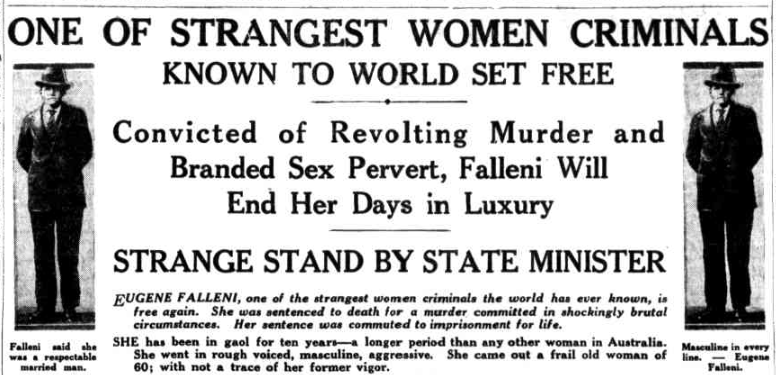
One condition accompanied that freedom. The Government required that Falleni resume living publicly as a woman. Accepting the condition without recorded objection, she adopted the name Jean Ford and quietly disappeared from the headlines that had once made her one of Australia’s most infamous prisoners.
For the first time in decades, she was able to begin again.
Yet even freedom would not bring the remarkable story to a peaceful conclusion.
A Quiet Life
When Eugenia Falleni walked through the gates of Long Bay in February 1931, she entered a world very different from the one she had left a decade earlier. The First World War had passed into history, Sydney had weathered the roaring twenties and was now struggling through the Great Depression, and public fascination with the so-called “Man-Woman Murderer” had largely faded. For Falleni, perhaps that anonymity was the greatest gift of all. After years of newspaper scrutiny and imprisonment, there was finally the opportunity to live a quiet life beyond the gaze of the public.
As part of the conditions attached to her release, Falleni resumed living publicly as a woman and adopted the name Mrs Jean Ford. There is little evidence that she resisted the requirement. Whether it represented genuine acceptance, resignation or simply the price of freedom is impossible to know. Like so much of Falleni’s remarkable life, the historical record is frustratingly silent. What is clear is that Jean Ford quickly settled into relative obscurity and, for the first time in decades, lived without the constant fear of police attention or sensational newspaper headlines.
Ford eventually became the proprietor of a small boarding house at 27 Glenmore Road, Paddington. It was a modest existence, a world away from the courtroom drama that had captivated Australia only a few years earlier. Former neighbours later remembered little remarkable about her. There were no further encounters with the law, no public controversies and no attempts to profit from the notoriety that had once surrounded her name. If anything, Falleni appeared determined to disappear into ordinary Sydney life.
For seven years, she succeeded.
Then, in 1938, fate intervened one final time.
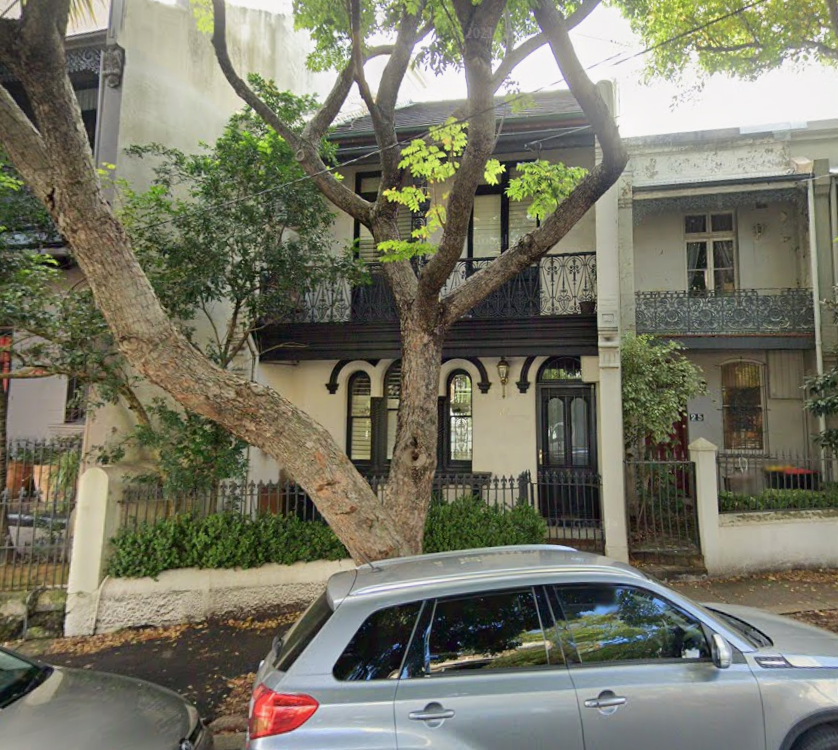
While crossing Oxford Street at Paddington, Jean Ford was struck by a motor vehicle on 9 June 1938, the same day she had sold 27 Glenmore Road, Paddington. Newsagent, James Charles Harris, at 98 Oxford Street, witnessed her step into the road, unaware she had stepped into the path of traffic. She suffered severe injuries and was taken to Sydney Hospital on Macquarie Street, where doctors fought unsuccessfully to save her life. She died the following day. In her purse, they found the proceeds from the sale of her home.
While police were questioning witnesses about the accident, a neighbour informed them that the deceased had told him once that her name was Eugenia Falleni. Police confirmed her true identity after comparing fingerprint samples with samples from 1920. On 29 June, a Coronial Inquest returned a finding of accidental death and that the deceased, known as Jean Ford, was Eugenia Falleni.
The names Jean Ford, Eugenia Falleni and Harry Crawford once again appeared in newspapers across Australia following the fatal accident. Although the reports were not nearly as sensational as those published eighteen years earlier, many still reverted to the now-familiar “Man-Woman” label that had dominated coverage of the murder trial. The public fascination that had once captivated the nation had largely faded, however. Sydney had changed considerably since 1920, and the story quickly disappeared from the headlines. The person who had once commanded front-page attention across Australia was quietly laid to rest in Rookwood Cemetery, attracting little public notice.
The tragedy did not end with Falleni’s death. Newspaper reports also noted that Falleni’s daughter, Josephine, had died several years earlier in Crown Street Hospital, leaving behind a young daughter who was being raised in an orphanage. It was a melancholy conclusion to a family history marked by abandonment, violence, imprisonment and loss—a final sorrow in an already tragic chain of events.
Epilogue: Justice, Memory and the Lane Cove Mystery
On the morning of 2 October 1917, an unidentified woman was discovered amongst the ashes of a small fire beside the Lane Cove River. More than a century later, the identity of that woman is generally accepted to have been Annie Birkett, while the person convicted of her murder remains one of the most remarkable figures in Australian criminal history. Yet despite the guilty verdict delivered in October 1920, the Lane Cove Mystery has never been entirely resolved.
It is easy to understand why the jury convicted Eugenia Falleni. The circumstantial evidence presented by the Crown was compelling. Harry Birkett identified the shoes, the green gemstone and the enamel mug as belonging to his mother. Independent witnesses placed Harry Crawford in the vicinity of the crime scene on the day Annie disappeared. Others described behaviour that appeared deeply suspicious in the days that followed. The evidence painted the picture of a person living under extraordinary psychological strain, haunted by events they struggled to conceal. Taken together, those circumstances convinced twelve jurors beyond a reasonable doubt. Yet history asks different questions than a criminal court.
Modern historians are not required to determine guilt or innocence. Instead, they must weigh the evidence, acknowledge its limitations and recognise where uncertainty remains. In the Falleni case, there are several aspects of the Crown’s case that continue to invite debate.
Foremost among them is the identity of the victim. Today, most historians accept that the remains discovered at Lane Cove were almost certainly Annie Birkett’s. Harry Birkett’s recognition of his mother’s possessions, particularly the repaired shoes, is persuasive. Nevertheless, the body itself could never be identified by modern forensic methods, and three years elapsed before detectives connected the remains to Annie’s disappearance. While few scholars now dispute the identification, it is worth remembering that the jury was asked to accept it on circumstantial rather than scientific evidence.
The cause of Annie’s death is equally uncertain.
The Crown argued that Falleni murdered Annie before transporting her body to the bushland and attempting to destroy it with kerosene. That remains the most widely accepted interpretation. However, the medical evidence available in 1917 could not conclusively establish whether Annie was already dead before the fire was lit. Police also investigated reports of a distressed woman seen wandering the area shortly before the body was discovered, giving rise to the possibility—however remote—that the fire may have been self-inflicted. Suicide by self-immolation is rare, but it is not unknown. The theory was ultimately rejected by investigators, yet it demonstrates that alternative explanations were considered from the very beginning.
Perhaps the most debated issue concerns motive.
The prosecution argued that Annie Birkett had only recently discovered that Harry Crawford had been born female and intended to expose the deception. Faced with public humiliation and the collapse of a carefully constructed identity, Falleni allegedly chose murder instead. It was a compelling narrative and one that undoubtedly resonated with a jury in 1920.
Whether it was true is another matter.
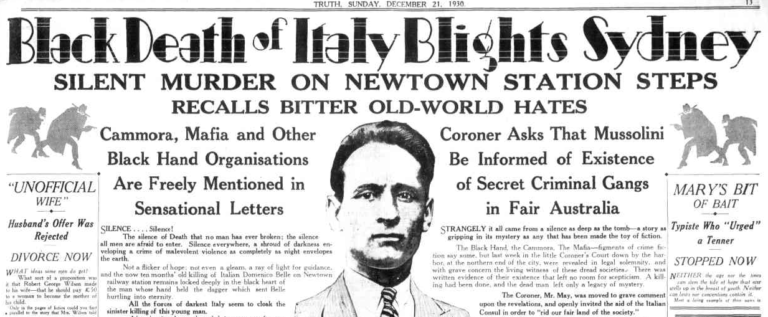
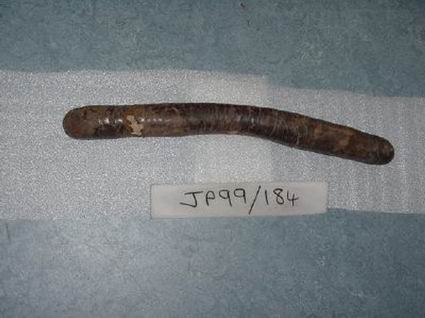
The historical evidence does not conclusively establish when—or even if—Annie learned of Falleni’s biological sex. During the investigation, police recovered a prosthetic penis, described in contemporary newspapers as being constructed from wood and leather, which Falleni reportedly admitted using during intimate relationships. The discovery quickly became one of the most sensational aspects of the case, eclipsing much of the evidence relating to Annie Birkett’s death. Newspapers dwelt upon the exhibit in lurid detail, despite its limited relevance to the charge of murder, and the public’s fascination soon extended well beyond the press. In a 1954 article published in Truth, former New South Wales Premier Jack Lang recalled that, during the trial, his political rival Thomas John Ley—then a Member of Parliament and later Minister for Justice—had displayed the prosthesis in his parliamentary office to visitors. Lang wrote that Ley was “openly gloating over his grotesque possession,” adding, “It seemed to be a strange kink for a great puritan.” Whether Lang’s recollection was coloured by the political animosity that existed between the two men or not, the anecdote illustrates the extraordinary degree to which public curiosity about Falleni’s private life overshadowed the central question before the court: who killed Annie Birkett?
More importantly, however, the existence of the prosthesis raises an obvious question that has intrigued historians ever since: did Annie really remain unaware throughout the marriage?
There is no definitive answer.
Some historians accept the Crown’s argument that Annie discovered the truth only shortly before her disappearance. Others have suggested she may have known long before the marriage or, at the very least, harboured suspicions. It has even been proposed that members of their social circle quietly accepted Crawford’s identity without feeling compelled to expose it publicly. The existence of female same-sex relationships was not entirely unknown in early twentieth-century Sydney. In 1932, for example, the Arrow published a sensational exposé of an alleged lesbian subculture centred on a William Street flat in Darlinghurst. The article described “Mona,” a masculine-presenting office worker who assumed the role of “husband,” and her feminine partner, “Dolly,” who was portrayed as maintaining the household while Mona worked. Although highly sensationalised and written to provoke moral outrage, the article demonstrates that such relationships were sufficiently familiar to contemporary readers to form the basis of a lengthy newspaper feature. It is therefore conceivable that a relationship resembling that of Crawford and Birkett could have existed without necessarily attracting immediate public exposure. Such suggestions remain speculative, but they illustrate how much of the prosecution’s alleged motive rested upon inference rather than direct evidence.
Perhaps the greatest injustice surrounding the case lies not in the verdict itself, but in the way the trial has been remembered.
For generations, Annie Birkett became little more than a footnote in the story of Eugenia Falleni. Newspaper headlines concentrated on the so-called “Man-Woman” rather than the woman who lost her life. The trial became a spectacle in which the accused’s gender identity often attracted greater attention than the evidence of the alleged crime. Modern readers cannot help but notice that many contemporary reports devoted more space to describing Falleni’s clothing, appearance and private relationships than to analysing the prosecution’s case.
Viewed through a twenty-first-century lens, it is impossible to ignore the prejudice that shaped much of the reporting. Language that was commonplace in 1920 is rightly recognised today as offensive and dehumanising. While historians must faithfully record those attitudes, they need not endorse them. Eugenia Falleni was, in many respects, a person who lived beyond the boundaries of what Australian society of the early twentieth century could readily comprehend. Whether one understands Falleni as a transgender man, a woman adopting a male identity for survival, or through some other interpretation, there can be little doubt that the extraordinary public fascination with gender profoundly influenced how the case was reported and remembered.
None of this diminishes the tragedy at the heart of the story.
Annie Birkett disappeared in September 1917 and never returned home. Her teenage son spent years believing she had voluntarily abandoned him before discovering, almost by accident, that she had almost certainly died in circumstances too horrific to imagine. Harry Birkett’s determination to seek answers transformed an unidentified body into one of Australia’s most famous criminal cases. Without his persistence, the Lane Cove Mystery may well have remained unsolved forever.
Whether justice ultimately uncovered the whole truth is something we may never know.
Like the quiet bush tracks that wind through Stringybark Creek Reserve today, the passage of time has softened many of the sharp edges of this remarkable story. The sandstone ledges remain, the river continues to flow, and walkers pass the secluded valley largely unaware of the tragedy that unfolded there more than a century ago.
Perhaps that is history’s greatest lesson.
Not every mystery is completely solved.
Sometimes all that survives are fragments of evidence, conflicting memories and a verdict that answers enough questions for a court of law—but never quite enough to silence history itself.
References
CHARRED BODY FOUND. (1917, October 3). The Daily Telegraph (Sydney, NSW : 1883–1930), p. 6. http://nla.gov.au/nla.news-article239233677
CHATSWOOD MYSTERY. (1917, October 3). The Sun (Sydney, NSW : 1910–1954), p. 7. http://nla.gov.au/nla.news-article221404268
STILL A MYSTERY. (1917, October 4). The Sun (Sydney, NSW : 1910–1954), p. 5. http://nla.gov.au/nla.news-article221392125
CHATSWOOD MYSTERY. Still not solution. (1917, October 7). Sunday Times (Sydney, NSW : 1895–1930), p. 1. http://nla.gov.au/nla.news-article122799058
CHATSWOOD MYSTERY. (1917, October 16). Evening News (Sydney, NSW : 1869–1931), p. 3. http://nla.gov.au/nla.news-article121246173
ANNIE BIRKETT’S GRAVE. (1920, July 9). The Riverine Grazier (Hay, NSW : 1873–1954), p. 3. http://nla.gov.au/nla.news-article141022818
MAN-WOMAN IN COURT. (1920, August 16). Evening News (Sydney, NSW : 1869–1931), p. 5. http://nla.gov.au/nla.news-article117703776
THE MAN-WOMAN. (1920, August 17). The Daily Telegraph (Sydney, NSW : 1883–1930), p. 5. http://nla.gov.au/nla.news-article239698895
MAN-WOMAN CASE. (1920, August 18). The Sun (Sydney, NSW : 1910–1954), p. 5. http://nla.gov.au/nla.news-article221501545
MAN-WOMAN’S DAUGHTER. (1920, August 19). Evening News (Sydney, NSW : 1869–1931), p. 7. http://nla.gov.au/nla.news-article117708170
MAN-WOMAN CASE. The Charred Body. (1920, August 19). The Daily Telegraph (Sydney, NSW : 1883–1930), p. 7. http://nla.gov.au/nla.news-article239699530
FALLENI TRIAL. (1920, October 6). The Daily Telegraph (Sydney, NSW : 1883–1930), p. 9. http://nla.gov.au/nla.news-article239761555
“I AM INNOCENT”. (1920, October 6). The Sun (Sydney, NSW : 1910–1954), p. 5 (Final Racing). http://nla.gov.au/nla.news-article222661380
FOUND GUILTY. (1920, October 7). The Daily Telegraph (Sydney, NSW : 1883–1930), p. 5. http://nla.gov.au/nla.news-article239768414
COURT OF CRIMINAL APPEAL. (1920, November 13). The Sydney Morning Herald (NSW : 1842–1954), p. 9. http://nla.gov.au/nla.news-article16875043
STRANGEST WOMAN CRIMINAL. (1931, March 8). Truth (Perth, WA : 1903–1931), p. 1. http://nla.gov.au/nla.news-article208144568
And Now Women. (1932, January 8). Arrow (Sydney, NSW : 1916–1933), p. 5. http://nla.gov.au/nla.news-article103477114
Saved From Gallows—Died In Car Smash! (1938, June 12). Truth (Brisbane, Qld. : 1900–1954), p. 20. http://nla.gov.au/nla.news-article206136773
EUGENE FALLENI, MAN-WOMAN, IS NOW DEAD. (1938, June 12). Truth (Sydney, NSW : 1894–1954), p. 14. http://nla.gov.au/nla.news-article169090662
Man–Woman Inquest. (1938, June 30). The Labor Daily (Sydney, NSW : 1924–1938), p. 5. http://nla.gov.au/nla.news-article236408710
CURTAIN ON MAN-WOMAN. (1938, July 3). Truth (Sydney, NSW : 1894–1954), p. 19. http://nla.gov.au/nla.news-article169089958
THE MAN-WOMAN WHO DECEIVED TWO WIVES. (1953, January 18). Truth (Sydney, NSW : 1894–1954), p. 11. http://nla.gov.au/nla.news-article168043524
LANG REVEALS…… (1954, February 21). Truth (Sydney, NSW : 1894–1954), p. 22. http://nla.gov.au/nla.news-article172055717